The Intersection of Human and Environmental Health, An Indigenous Perspective
Authors: Cheyenne Kippenberger
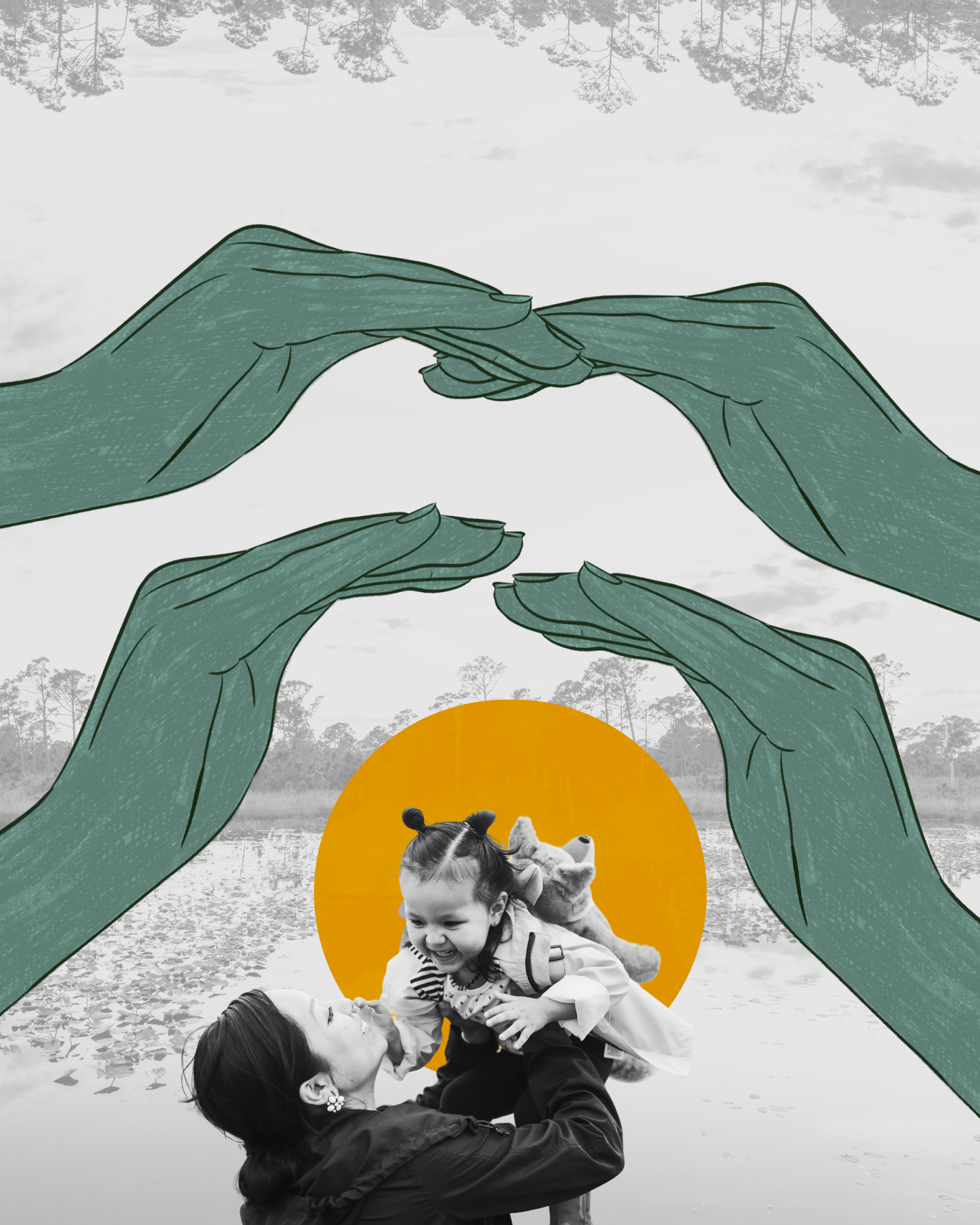
Across the nation, we are witnessing climate change and environmental destruction. It is the extreme heat in summer and frigid drops in temperature in the winter that our electricity bill reflects monthly in exorbitant charges, it is the catastrophic weather events like hurricanes, floods, and droughts that force communities to relocate and suffer, it is the collapsing of ecosystems and endangerment of animals. From wildfires in the Northwest to drought in the Southwest to sea levels rising along the coast, it affects all parts of our lives: our food systems, our access to water, and even our physical health.
Abuse and destruction of the land for the sake of development is no newfound concept to the United States or to the state of Florida. Cow pastures have been cleared, paved over, and developed into shopping centers, restaurants, and unaffordable condos. Beaches are plagued with algae blooms and dead marine life, wildlife corralled into small areas of land with little to sustain their own lives and species, and stronger, more frequent storms destroying entire communities in their path. The Florida Everglades have been a victim of draining, manipulation, mismanagement, pollution, and abuse to make way for the development of modern Florida, a process that began in the late 1800s and continued well into the 20th century. The environmental harm that started with this country’s founding continues today, and our home has changed and suffered across generations, witnessed by my great-grandmother’s eyes, her daughter’s eyes, and now my own. Development, pollution, climate change, and the prioritization of profit over health have altered everything our people once knew as balance. This land, before it was ever called Florida, was respected and thrived in a harmonious mutualism with my people.
Through three Seminole wars spanning almost 100 years, the Indian Removal Act, being hunted and rounded up like cattle, forced deeper and deeper into the sanctuary of the Everglades, the Seminole and Miccosukee people fought to stay in their homelands of Florida. The only two federally recognized tribes in the state, the Seminole Tribe of Florida and the Miccosukee Tribe, are a community of proud and resilient people that never signed a peace treaty with the U.S. Government. Our medicines, foods, songs, and dances, and even our creation story, are deeply connected to the Florida Everglades. The identity of Seminole and Miccosukee people is so closely intertwined that it is believed that if the land dies, so will the people. Seminole and Miccosukee’s traditional, cultural, religious, and recreational activities are all dependent on a healthy South Florida ecosystem. The health of our people, physically, emotionally, and spiritually, is inextricable from the Everglades. Our ideas and perspectives of nature are shaped and led by our ways of culture and life.
May it be strongly noted that the environmental crisis we are in today cannot be separated from the very same practices, beliefs, and violence that led to the dispossession of land and exploitation of people and natural resources that created and built this country. It is these same colonial ideologies that serve as the foundation for policy and business conducted today in this country that prioritizes the exploitation and commodification of natural resources rather than its people's well-being and environment’s stability. In just a few hundred years, rapid climate change, mass extinction, and extensive habitat destruction have exacerbated. We are at a point of irreversible environmental damage and loss.
These differences in priorities come from differences in perspectives on policy, conservation, preservation, and even economics. Western colonial views understand people to be separate from nature, viewing the land, water, and air as resources to be managed or commodified. By contrast, Indigenous people view our people as a part of the larger balance of nature, with an inherent responsibility to care for it. These differing perspectives often clash, particularly in conservation, preservation, and restoration efforts, and in policy creation.
Too often, external agencies or organizations that serve environmental missions focus on protecting and conserving areas or animals through isolation and severing public access to them. Once a land is formally protected or in conservation, human activities of recreation, such as hunting and fishing, are completely prohibited, farming and access are limited, and this further threatens Native communities that rely on those lands and activities. Indigenous methods focus on an integration of Indigenous knowledge systems, communal stewardship, traditional ecological knowledge or Tribal sciences, traditional regulatory practices, and a future-forward way of thinking that prioritizes sustainability, health, and future generations.
Indigenous knowledge systems have been developed over centuries and reflect a deep understanding of local ecosystems, sustainable practices, and holistic approaches to health and development. It is shaped by Indigenous communities’ cultures, and histories are intertwined closely with the local environment. These systems span across land use, ecosystems, medicinal plants, sustainable agriculture, resource management, and traditional healing practices. Collectively, it encompasses environmental conservation, restoration, agriculture, spirituality, ecology, biology, epistemology, ontology, and axiology. Deeply rooted in regional relationships and experiences, this place-based knowledge is specific to territories, regions, and communities.
Indigenous people have acquired observations, skills, lessons, and evidence through direct contact with nature over millennia. Through oral tradition and storytelling, the developed knowledge, innovations, practices, and beliefs are passed down from generation to generation. Traditional Knowledge continues to evolve as new observations are made of soil, water, seasons, species, and condition changes. We know these knowledge systems to be referred to as traditional ecological knowledge or Native sciences.
Indigenous environmental stewardship is rooted in the belief of kincentric ecology, that humans are kin to the natural world. It is the belief and perspective that the natural world is a community of relatives, where humans are one member among many, not a single dominant species amongst those weaker. Human and environmental health is inseparable. We know a person’s mental, physical, and spiritual health to be tied to the health of the land, water, air, and its animal inhabitants. Kincentricity is a deep connection based upon practices of mutual respect, reciprocity, and responsibility towards all other living and non-living elements in nature. We practice this by interacting responsibly with the environment, by not only taking or extracting from nature, but by giving back through sustainable methods and minimizing harm to ecosystems and animals. It is the recognition that all living beings have inherent purpose and worth and an awareness that life in any environment is feasible only when humans view and respect the life surrounding them as kin. Land and resource management reflects values of sustainability, respect for culture, spirituality, and tradition, care for future generations, self-determination, and the deep connection between human and environmental health. A leading, practical example of sustainable forest management rooted in Indigenous Knowledge is the Menominee Indian Tribe of Wisconsin’s Menominee Forest. The 235,000-acre forest has been managed by the Menominee for over 150 years through sustainable management practices and a "forest-first" philosophy, predating even the most current sustainability. By blending Indigenous knowledge systems and modern forestry practices, the Menominee have supported forest biodiversity, exemplified sustainable livelihoods, and have even grown their standing timber volume from 1.3 billion board feet in 1870 to 1.7 billion today, even with continuous harvesting occurring. Reciprocal practices can yield resilience and longevity for the land and for the community when done so in a way that honors life, balance, respect, and collective well-being.
Respecting place means that decisions must align with and consider the ecosystems and communities in which they are. For centuries, Indigenous people have practiced sustainable agriculture through methods like intercropping, controlled burning, crop rotation, seed banking, and seasonal planting. One well-known example is the “Three Sisters” method, where beans, corn, and squash are planted together. Beans restore soil nitrogen and fertility, corn provides a support structure for the beans to climb, and squash shades the ground to retain moisture and suppress weeds. Together they support, nourish, and protect each other. Giving and receiving in a self-sustaining system that provides crop diversity, enriches the soil, and conserves resources, leading to food security and environmental resilience that benefits all surrounding life. Controlled burning is another long-standing practice used by Native and Indigenous people across the U.S. to manage landscapes for ecological purposes such as catastrophic wildfire prevention, game habitat improvement, promoting growth of medicinal and edible plants, clearing undergrowth vegetation, and travel. These prescribed, low-intensity burns promoted ecosystems that were fire-adapted and dependent. When controlled burns or cultural burnings were outlawed at the state and federal level underbrush growth built up, making the land more vulnerable to severe wildfires.. For many Native communities, fire was a tool to steward land and relates back to Traditional Tribal Knowledge of medicine to prescribe in proper dosage to “maintain abundance and productivity of all ecosystem services to support the ecology in your culture” (Roos, 2021).
Indigenous knowledge systems, communal stewardship, traditional ecological knowledge or Tribal sciences, traditional regulatory practices and a future forward way of thinking that prioritizes sustainability, health and future generations.
We know modern losses of biodiversity are directly connected to the impacts of colonialism on previously Indigenous-managed lands, and we also know that these effects can be reversed through the re-application of stewardship and practices that center Indigenous values and views. Indigenous methods hold a holistic worldview, focus on community stewardship, and utilize place-based knowledge compared to mainstream methods that are analytical, individual-focused, and reductionary.
Environmental policy through an Indigenous lens would fundamentally differ from today’s ideologies of exploitation, commodification, and profit. Especially contrasting with Western policy, it would prioritize reciprocal responsibilities, relational values, and place-based knowledge. This would require a shift from ideas of ownership, property rights, and resource extraction to a system of thinking that perceives nature as a living being with inherent rights and prioritizes sustainability. This system includes and values Indigenous peoples and their knowledge in decision-making. Rather than short-term productivity, it focuses on long-term sustainability, relationship with the land, and the use of Traditional Ecological Knowledge (TEK) alongside Western science in practice.
The intersections of human and environmental health reveal that the fate of people and place is not only intertwined, but inextricable. For Native and Indigenous communities, such as the Seminole and Miccosukee, the health of their homelands is a living part of their heritage and identity. This reciprocal relationship contrasts with the dominant Western paradigm that perceives land and resources as commodities and perpetuates land degradation.
A truly sustainable future, anchored in responsible stewardship and the health of all living things, must be built on a foundation of Indigenous knowledge systems, practices, and values in policy and land and resource management. Kincentric ecology and land stewardship are not abstract concepts; they are proven pathways to resilience and well-being, demonstrated by the Menominee and agricultural practices like the “Three Sisters” method and cultural burnings. The health of the land, water, air, plants, and animals is a reflection of our own health and future. Environmental restoration is not merely a technical or economic problem, but a profound ethical obligation and a recognition of kinship across all forms of life. Only by embracing these relational values will we ensure lasting health for people and the planet.
References
Roos, Dave. 2020. Native Americans Used Fire to Protect and Cultivate Land Indigenous people routinely burned land to drive, prey, clear underbrush and provide pastures. https://www.history.com/news/native-american-wildfires

