The Common Future 2025 Annual Report: Claiming the Next Chapter as We Approach 250 Years
Authors: Common Future


A Letter from the CO-CEOs
Friends,
As 2026 begins and our country approaches the 250th anniversary of the Declaration of Independence, we find ourselves at a pivotal moment. The promise of equality and liberty was written into a nation built on the enslavement of Black people and the dispossession of Indigenous nations. From the beginning, those founding ideals excluded many—what would be today a rising majority. The distance between those words and our reality remains stark. Yet this milestone invites us to ask what our country could look like if we truly fulfilled those early promises for everyone.
This anniversary calls on us to confront the truth: the American project began with exclusion and a vision of liberty that left too many people out by design. Extraction, broken promises, and barriers to justice are woven throughout our history. At the same time, each generation has insisted on expanding the promise, working to bring justice, dignity, and agency to more people.
The ideals we inherit have always been incomplete, borrowed, and fiercely contested. Many think of democracy as an American invention, but the founders looked to Native governance and the wisdom of the Haudenosaunee Confederacy. As they borrowed these principles, they displaced and erased the people who lived by them, obscuring the origins and distorting the meaning of shared governance.
This struggle continues today. Last year, government actions and private interests weakened and actively undermined the very institutions meant to serve and inform the public. Funding cuts gutted vital services and organizations working for economic justice. Powerful individuals bought up media outlets to silence dissent, and lawsuits threatened groups advancing equity. These attacks hit Black, Indigenous, and other communities of color first and hardest. The pressure makes it even harder for those advancing justice to keep going and challenges all of us to hold onto hope.
We do not live in ordinary times. The national conversation around equity and democracy has shifted from difficult to dangerous. Economic divides have widened, and the right to safety, dissent, and basic dignity feels newly fragile. In too many places, public dialogue has narrowed and the climate of fear has grown.
This report chronicles what it means to endure and act with purpose when the world feels unstable. In 2025, we leaned into Mariame Kaba’s discipline of hope. Every day, we chose to move forward and invest in possibility, even when the path was uncertain. Facing constrained resources, we invested $1,837,500 through Community Credit Lab (CCL), distributed $125,000 in capacity building grants, and helped small businesses weather storms they did not create. Every number in this report reflects a decision to push for progress.
We also launched new efforts to build power and connection: from our Childcare Action Lab to our Legacy Lab, from our Systems Change Coalition to new narrative work that lifts up the people and organizations shaping what comes next. These stories point to a future where we expand and realize the ideals in the Declaration of Independence for everyone. The authors wrote the document at a time when they intentionally excluded many, and their vision was narrow. We choose a different vision. We work toward a country where equity and inclusion stand at the center of our democracy and economy. We want “we the people” to reflect the rights, voices, and well-being of all who call this place home.
We measure our progress by the discipline and solidarity we show each other every day. The work is harder now. We hold tight to hope and determination, even as forces work to undermine them. As long as we stand together, our shared purpose endures.
As we enter this milestone year, we move forward with clear eyes, steady resolve, and a simple invitation: stand with us. The promise of an economy that works for all remains within reach. We can still build this future if we act together and refuse to let it slip away.
With deep gratitude,
Jennifer Njuguna
Jess Yupanqui Feingold
Sandhya Nakhasi

Rooted in Strategy, Guided by Community
Over the past two years, we completed a multi-year strategic plan drawing on nearly twenty-five years of experience working in communities that have always been expected to thrive within systems never designed for their inclusion. The promise of an equitable economy in the United States has always been contested. Our country’s economic foundations were built by excluding, extracting from, and dispossessing Black, Indigenous, and other communities of color.
Communities of color have long demonstrated what an equitable economy can look like. Their models persist, adapt, and thrive even when justice is denied. At Common Future, our mission is to lift up and invest in these community-led solutions, making them the rule rather than the exception. The path to an equitable economy has always depended on who is allowed to participate and whose approaches are valued. Too often, this country has ignored Indigenous and Black wisdom, even as these communities have shown how collective well-being and shared governance can succeed.
Last year, we brought our refined strategy to life. We focused on the root causes of inequity: extractive financial systems, exclusionary power structures, and harmful mainstream narratives. Our approach centers on three pillars. We work to change how capital flows so communities can invest in their own futures. We amplify the voices and visions that reveal new possibilities. We build the power needed to influence the decisions that shape our shared world.
This commitment took on new meaning when our team gathered in Philadelphia. This was more than a retreat. It gave us the chance to see the results of our investments on the ground. Meeting with Kensington Corridor Trust, we witnessed community ownership in action. Vacant storefronts reopened, new businesses launched, and neighbors directed the transformation of their own blocks. KCT’s model, which anchors property in a neighborhood trust, preserves affordability, and centers resident leadership, demonstrates how investing in local power, sharing decision-making, and prioritizing repair can move ideas into lasting change.

"Lots of Lots of Love" mural located in Philadelphia, PA, painted by artist John C. Zerbe.
Throughout the year, our resolve deepened through participation in national gatherings, networks, and coalitions. These included the Assembly of Black Possibilities 2025, Aspen Ideas Festival, Black Economic Alliance, Clinton Global Initiative, The Gathering on Martha’s Vineyard, Opportunity Finance Network, Proximate Press Participatory Investing Gathering, RaceForward, Urban Institute, and SOCAP. We also strengthened relationships with partners across the country. These connections reminded us that we are part of a larger movement for economic justice. The most powerful transformations happen when communities lead.
In this report, you will see these pillars in action. Catalyzing Capital for Community Impact shows how we are moving non-extractive capital into community. Advancing Change through Action Labs highlights stories of collaboration and innovation, led by those closest to the challenges. Shaping Narratives for Systemic Progress showcases how new voices and stories are broadening the circle of belonging. Together, we are building the systems, relationships, and models needed for a thriving, equitable, community-led future.
Catalyzing Capital for Community Impact

The roots of our economy run deep in histories of displacement and forced labor, with Black and Indigenous communities forced to bear the costs while others reaped the benefits. After the Civil War, Black communities and Indigenous nations faced new waves of dispossession, violence, and exclusion. Today, these communities still bear the heaviest burdens of economic injustice, yet they also hold generations of cooperative wisdom. Against every expectation, they have built models for survival, resilience, and collective well-being—systems forged in adversity and designed to thrive where others thought they would fail.
These are the communities we uplift. We believe capital belongs with those who have proven, again and again, that they know how to create something better. Our investments focus on Black, Indigenous, and other communities of color who continue to lead with vision and determination. They create economic systems rooted in community ownership, accountability, and healing.
When we move money, we put community-rooted and community-governed enterprises first. We prioritize strong systems of accountability, reparative practices that address both past and present injustice, and a commitment to dignity in every aspect of work and daily life. The leaders we support build power in the face of ongoing extraction and underinvestment. They hold institutions responsible for their impact, ensure resources reach those closest to the issues, and restore what was taken.
Every investment represents a shift in who holds power and who benefits from economic progress. Our goal is an economy where equity and belonging are woven into daily life. Through our Community Credit Lab (CCL) Fund, we are managing $10.3 million in assets with $6.7 million invested to date, and in 2025 alone, we deployed $1.8 million in affordable capital . This year, we reached two important milestones, we crossed 200 loans deployed, and had our first intermediated investment fully repaid, showing that trust-based, community-driven finance is necessary and can last. We were also listed in the Transformative 25 and ImpactAssets Emerging Manager, which highlight community-rooted fund managers with potential to make waves in important spaces like climate, social inclusion, and community development.
Now, five years into this work, we have learned what it takes to move capital in ways that truly serve communities. What began as a pilot in making loans based on character has grown into Relationship-Based Lending, which relies on building sustained relationships rooted in trust, care, and accountability.
This year, we gathered with peers and partners who share this approach and surfaced lessons that will shape our work going forward. Building trust requires time and labor that traditional finance rarely recognizes. True lending shifts power, centers the needs of borrowers, and acts as repair for harm caused by extractive systems. This only works when we invest in long-term partnerships, operations, and infrastructure, and measure success by more than financial metrics.
The investments highlighted here show where capital moved, how it moved, and the values that shaped every decision along the way
Community Credit Lab: 2025

Total investment capital deployed:
$1,837,500

Capital returned: $603,251

Affordable loans approved: $1,825,000

Loans outstanding: $4,786,607

Average loan size: $65,178

28 loans approved; 24 small businesses and 4 funds directly supported
Black Farmer Fund
We invested $250,000 at 3% interest over five years in the Black Farmer Fund (BFF), supporting their Community Wealth Building Notes and enabling larger, more responsive loans for Black farmers and food entrepreneurs across the Northeast. BFF provides not only capital but also technical assistance, network building, and a deep commitment to equity and well-being for its portfolio, which is 100% Black-owned.
Denkyem Coop
A $475,000 loan at 0% interest, and a $25,000 grant, to Denkyem Co-op helped unlock a $3.1 million reimbursable grant from the Washington State Department of Commerce. With this flexible capital, Denkyem was able to deploy nearly 100 microbusiness loans in a short period, allowing our capital to be recycled quickly into additional community lending and catalyzing additional funding from other partners. This partnership illustrates how targeted support can multiply local economic impact and strengthen community well being.
Fondo Solidario
We deepened our partnership with Fondo Solidario by investing $250,000 at 0% interest, supporting their next phase of growth. Fondo’s leadership and community-driven approach exemplify the evolution of lending models that are responsive, strategic, and rooted in member needs. Our investment supports their fundraising and ability to meet emerging community challenges.
The Ke’nekt Cooperative
In Atlanta, we supported The Ke’nekt Cooperative with a $25,000 grant and a $250,000 investment in their lending program. The Ke’nekt Cooperative anchors Black economic power and belonging by providing cooperative ownership and access to capital in a city experiencing rapid change and displacement of small brick-and-mortar businesses.
Loiter
We provided Loiter with a $350,000 direct loan at 0% interest and a $25,000 grant, along with flexible repayment terms, to support their growth as a microfood and collaboration hub for 15–20 community-led businesses, artists, and creatives in East Cleveland. Loiter’s model shows how nimble, responsive funding can empower under-invested Black communities, redefine traditional ideas of risk, and put community benefit and asset building first.
Moonsoon Fund
We invested $250,000 at 0% interest in the Moonsoon Fund, designed by Indigenous women and led by Roanhorse Consulting LLC, centered on matriarchal leadership, deep relationships, and the 5Rs of Rematriation—Relational, Rooted, Restorative, Regenerative, and Revolutionary. This partnership supports wealth-building by and for Indigenous communities, grounded in tradition and focused on future generations. In 2025, we also supported $1,250,000 in grants and promissory notes from multiple investors to be directed to the Moonsoon Fund’s loan programs, further strengthening its impact and reach.
Advancing Change through Action Labs

Centuries of exclusion and extraction shaped the economic landscape that communities face today. We designed our Action Labs to challenge this reality by putting control, resources, and leadership directly into the hands of those most impacted. Our $500,000 grant capital fueled new approaches, and many participants attracted additional funding, bringing these ideas to life in their home communities. These efforts have already started to give neighborhoods a stronger voice in shaping their own futures.
We learned that people who know injustice firsthand build solutions that work in practice and connect across fields. Collaboration helped communities move past isolation and break through the barriers that have held back progress. When local leaders gain resources and the space to lead, they drive forward new strategies and plant seeds of hope, even under difficult circumstances.
Every Action Lab adapted these lessons to fit the unique strengths and challenges of its community, proving that transformation takes root when those closest to the issues have the tools and authority to create change.
Systems Change Coalition: Building Power Across Movements

As part of our 2025 cohort, we created the Systems Change Coalition to address the disconnect between direct service work and policy influence in the economic justice field. Too often, organizations working on the frontlines respond to urgent community needs but remain isolated from policy decisions that shape those very challenges. This fragmentation keeps community wisdom and experience out of the rooms where systems are designed. Throughout the year, more than 50 organizations joined monthly gatherings to build relationships, share strategies, and explore how to connect local action to broader policy change.
By working together, participants began breaking down barriers between service delivery and advocacy, laying the groundwork for collective action that reaches beyond crisis response. In 2026, the What If Action Lab will continue this effort, supporting leaders as they develop strategies for long-term transformation and greater community influence.
Legacy Lab: Advancing Community-Owned Black Businesses

With the Legacy Lab, we set out to strengthen Black-led, community-governed businesses that serve as neighborhood anchors. We chose this focus because collective ownership challenges displacement and economic exclusion at their roots. In partnership with Black Classic Press, Our Time Kitchen, BRED, Anti-Gentrification Cxffeeblack, Elite Performance Foundation, Culinary Femme Collective, Partners in Equity, Detroit People’s Co-op Grocery, ProsperUS Detroit, and Howard Family Bookstore, we fostered collaboration across Detroit, Baltimore, Durham, and Memphis—cities with long histories of collective governance and community ownership.

Legacy Lab participants are incorporating community governance and accountability frameworks into their business models and, in some cases, formally transitioning to worker-owned cooperatives. They are reimagining their roles as community anchors and developing expansion plans that respond to the needs of communities long sidelined by profit-only business models. Participants are also leveraging the $500,000 in grant dollars invested through the Lab, along with the narratives and frameworks co-created during the program, to secure additional resources from private and philanthropic investors. Together, they are building mutual support networks and piloting strategies for community wealth. In the coming year, we will share a research report to inform future partnerships and expand the reach of community-owned businesses as engines of local power.
Childcare Action Lab: Building the Case for a Caring Economy
We launched the Childcare Action Lab at CareFest 2025 in New York City to highlight care as a building block of an equitable economy. At a moment when support systems are increasingly under strain, we brought together Black and Indigenous leaders and partners, including Springboard to Opportunities, the Maven Collaborative, Family Values @ Work, UpTogether, Alliance for Quality Education, and Child Care for Every Family. Together, participants are crafting new narratives and developing policy tools to help organizers and funders advocate for guaranteed income, paid leave, and stronger family well-being.

Accessible and dependable childcare allows parents to pursue work, participate in business ownership, and play an active role in their neighborhoods. The work of this Lab is closely linked to both business ownership and policy change. When care is secure, families can contribute to community wealth and leadership. Strengthening care infrastructure supports every other aspect of building community power and an equitable economy.
Shaping Narratives for Systemic Progress
Entrenched narratives often keep people feeling powerless and disconnected, reinforcing old systems and dampening the imagination needed for change. Throughout the year, we convened conversations and connected to the work of partner organizations, including BLIS, Building Movement Project, Common Justice, Economic Security Project, FirstRepair, Kensington Corridor Trust, Parity Homes, PolicyLink, and Runway, inviting people to see themselves as creators of the future—not just bystanders.
By collaborating within this broader ecosystem, we challenged the repetition of limiting stories and brought forward ideas that speak to both the urgency and the hope of this moment. Our work focused on disrupting the paralysis so often created by relentless bad news and entrenched assumptions. When people hear their experiences reflected and their questions taken seriously, hesitation gives way to engagement. Community members and partners showed us that shifting narratives is not just about changing minds; it is about restoring agency and opening new pathways to collective action. Through this work, we are making more space for new visions and deeper belonging to take hold.
Redefining Risk: Collective Wisdom for Uncertain Times

Now in its second year, the Redefining Risk webinar series has become a trusted space for leaders, advocates, and practitioners to talk honestly about what it means to pursue justice and equity in challenging times. In 2025, these conversations tackled some of the field’s toughest questions: how to sustain community ownership, what it takes to protect economic gains and community wealth for the long term, and how organizations can manage risk in a shifting policy and funding landscape.
This year’s sessions included:
- Fighting for Justice, Multiracial Democracy, and an Equitable Economy in Dark Times — a conversation with Jennifer Njuguna, Co-CEO of Common Future; Karla Monterroso, Founder and Managing Partner of Brava Leaders; and Angela Glover Blackwell, Founder-in-Residence at PolicyLink. Together they reflect on the history and future of multiracial democracy and what’s needed to advance an equitable economy.
- Risky Business Part 2: Managing Organizational Risk in an Evolving Landscape — a conversation with Sandhya Nakhasi, Co-CEO of Common Future; Jennifer Njuguna, Co-CEO of Common Future; Erika Seth Davies, CEO of Rhia Ventures; Vishal Reddy, Executive Director of Work Four; Kelly Burton, CEO of Building Impact Advisors (BIA); and Deepa Iyer, Senior Director of Strategic Initiatives at Building Movement Project. This session offers practical advice and frameworks for assessing and managing risk in today’s uncertain climate.
- Redefining Risk in the Ownership Economy — a conversation with Sandhya Nakhasi, Co-CEO of Common Future; Jennifer Njuguna, Co-CEO of Common Future; Marissa Guananja, VP of Impact Initiatives at Common Future; Dr. LesLeigh D. Ford, Associate Director and Practice Area Lead for the Center for Equity and Community Impact at the Urban Institute; and Bree Jones, Founder of Parity Homes. The panel explores how community control and protection can make ownership a force for collective liberation, especially through structures like land trusts, cooperatives, and community finance.
- Redefining Risk in the Ownership Economy, Part 2: Building Ownership That Lasts —a conversation with Victoria Monteiro, Chief of Staff at Common Future; Adriana Abizadeh-Barbour, Executive Director of Kensington Corridor Trust; Ismail Samad, Co-Founder of Loiter; and Curt Lyon, Executive Director of Transform Finance. This discussion dives into the practical steps of sustaining community ownership for generations and preventing displacement.
By bringing together organizers, funders, policy experts, and practitioners, the series provided strategies and solidarity, reminding us that, even in dark times, collective wisdom and honest conversation are essential tools for building resilience and moving forward. Redefining Risk continues to be a place where our sector comes together to learn, problem-solve, and imagine bolder ways forward, no matter how uncertain the road ahead.
Futurists: Growing Imagination, Connection, and Dialogue
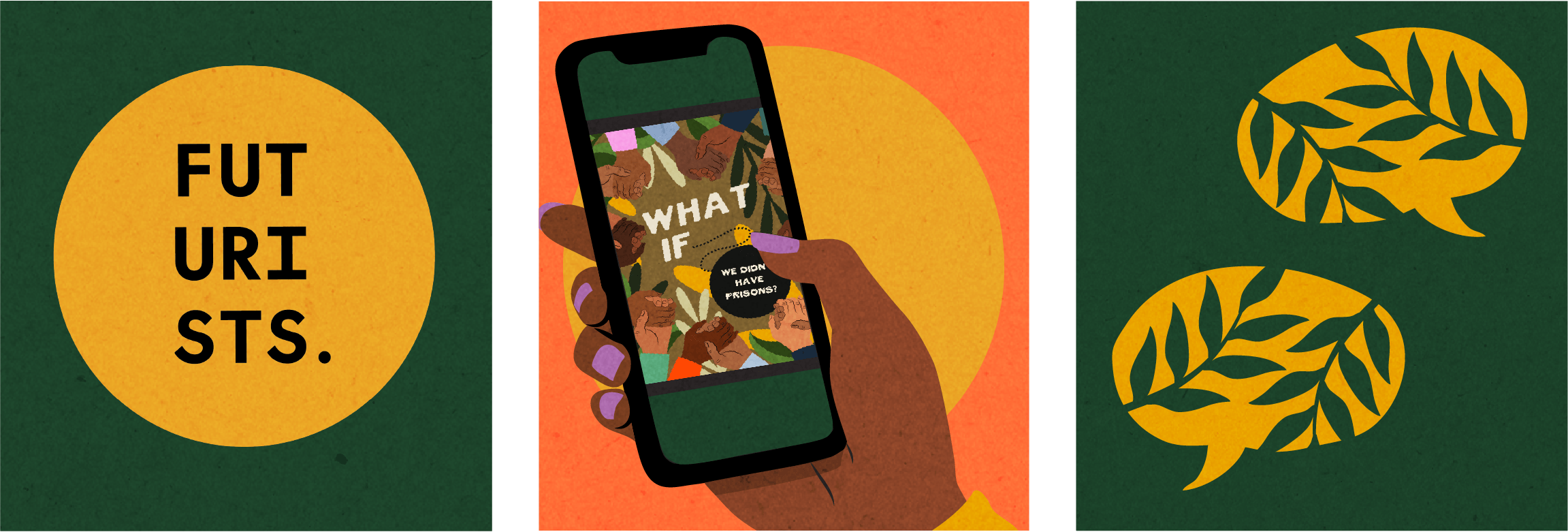
The Futurists community on Instagram has become a vibrant space for people to think differently about justice, equity, and what the future can hold. By early 2026, our reach extended to 80,000 followers on Instagram, and our expansion to TikTok has opened new doors for connecting with even more people. In the past year, our 48 posts generated substantial engagement, reaching over a million viewers and sparking over 3.5 million views. The “What If?” series struck a chord, inviting conversations on everything from housing and motherhood to freedom and collective action.
People in the Futurists community routinely share ideas, challenge each other, and return to the conversation for inspiration. Comments show curiosity, encouragement, and a willingness to dig deeper. We use this platform not just to share content but to test messages and see what resonates, offering accessible entry points that spark curiosity and help people build a deeper understanding of economic justice. Every interaction, every question, and every story helps move the conversation forward and brings new voices into the movement for systemic change. With our reach more than doubling since 2024, Futurists is proof that there’s a growing audience eager to connect, dream, and shape new narratives together.
Futurist-in-Residence: Shaping Economic Futures

In 2025, Common Future continued the Futurist-in-Residence Program to partner with visionary leaders reimagining economies rooted in justice and lived experience.
Our inaugural Policy and Advocacy Futurist-in-Residence, Cheyenne Eete Kippenberger (Seminole Tribe of Florida), brought a powerful perspective on climate justice and Indigenous sovereignty to this work. During her residency, Cheyenne drew on her experience as a cultural advocate and her deep ties to the Florida Everglades, showing how Indigenous knowledge and kinship with land offer practical, place-based answers to today’s climate challenges, reminding us that restoration and resilience start with communities who have been caring for land and water for generations.
As our Narrative Futurist-in-Residence, Anna Gifty Opoku-Agyeman brought a fresh perspective and deep expertise in economic justice to our work. Anna Gifty Opoku-Agyeman joined our narrative team to bring expertise and grow our audience through accessible economic justice content. Her videos, created in partnership with the team behind Futurists, have been seen by nearly 300,000 people. We also partnered with Anna to kick off her book tour for The Double Tax: How Women of Color Are Overcharged and Underpaid, hosting a panel conversation with Tamieka Atkins of ProGeorgia and Errin Haines of 19th News to explore the book’s themes and the real-world systems behind the double tax. Throughout her residency, Anna’s approach made complex economic issues more approachable and actionable, helping us reach new audiences and center the lived experiences of Black communities in the conversation about our economic future.

Together, our Futurists-in-Residence are helping us all imagine what’s possible when leadership, wisdom, and solutions come directly from those most impacted by injustice.
“What If” Podcast: Imagination as Infrastructure

Building on the momentum from the Futurists series, the What If? Podcast launched to expand from Instagram into different digital mediums, and to explore what becomes possible when Black Indigenous, and other communities lead with imagination beyond limitation. Each episode invites thinkers, artists, and organizers to show how political imagination can become the blueprint for repair and justice, especially in times when progress feels stalled, or the path forward is unclear.
This season, our guests tackled questions that rarely make it into mainstream debates but are essential for building new futures:
- What if there was no rent? with Natalie Foster, Economic Security Project. In a time of housing crises and rising displacement, this episode asks what it would take to imagine housing as a human right, not a commodity.
- What if we loved the land? A conversation with Brea Baker, freedom fighter and author. As environmental threats and land dispossession persist, centering love and stewardship over extraction offers a new foundation for climate and community repair.
- What if we responded to harm with care? A conversation with Danielle Sered, Common Justice. With cycles of punishment and incarceration failing communities, we explore what real accountability and healing could look like when care, not retribution, leads.
- What if justice meant repair? A conversation with Robin Rue Simmons, FirstRepair. In an era of renewed calls for reparations, this episode dives into the practical steps and deep transformation required to repair historical harms and build true equity.
- What if we redefined economic success? A conversation with Jessica Norwood, Runway. As traditional measures of success leave many behind, we ask what it means to center well-being, community wealth, and shared prosperity in our economic systems.
- What if our climate was in harmony with itself again? A conversation with Cheyenne Kippenberger, Futurist-in-Residence. Facing climate crisis, this conversation lifts up Indigenous knowledge and kinship with the land as vital pathways for environmental healing and sustainable futures
By asking these questions, the podcast invites listeners to break free from “that’s just how it is” thinking and imagine alternatives that center care, belonging, and collective well-being. In a year marked by uncertainty and narrowing public debate, What If? created space to dream out loud and organize around new possibilities. In its first year, the podcast reached over 1,000 listeners and sparked hundreds of shares across our digital platforms, expanding the reach of bold, community-rooted ideas. Stay tuned for Season 2 in 2026.
Claiming the Next Chapter

As we close this year and look toward what comes next, we remain grounded in purpose and possibility. Building true democracy and prosperity means acknowledging the harms at our origins and drawing on the wisdom of those who have been excluded. This 250-year milestone calls us to create a society built on truth, repair, and collective self-determination.
The future is uncertain. The choices we make today will shape what is possible for generations. Over the past year, we met challenges with steady, determined action. We practiced hope as a discipline, choosing persistence even when the path was difficult.
Every loan approved, business supported, and initiative launched reflects a commitment to healing what has haunted this country since its founding. Communities are building power in places long overlooked, using new models to shape their own futures. Our investments through Community Credit Lab, partnerships like those with The Ke’nekt Cooperative and Kensington Corridor Trust, and the work of our Action Labs all show what becomes possible when community leadership guides resources to where they matter most. Our narrative work, through the What If? Podcast, the Futurists community, and Redefining Risk series, has expanded the public imagination, challenged outdated assumptions, and created space for new voices. New stories can then spread and open doors for policy change, fresh ideas, and a greater sense of belonging.
We do this work to address unfinished business from our country’s founding and to honor the deeper democratic traditions that have always existed here. We invite you to continue this journey with us. Whether you are building ownership in your community, investing in new solutions, or holding onto hope during difficult times, your actions matter. Together, we build, we question, and we shape a future that includes everyone.
Thank you for standing with us. The work continues.


