What if justice meant repair? (with Robin Rue Simmons)
Authors: Daydriane Chapman, Digital Strategy Manager
Listen on Spotify / Listen on Apple Podcasts
Daydriane Chapman: We Still Bloom, a tribute to Gwendolyn Brooks.
We still bloom. We claim room. We again begin. We still grin. We don’t wait. We make fate. We fine jewel. We real cool.
For generations, justice has meant punishment or progress on paper. But real justice requires repair, returning what was taken and building what should have been there all along.
This is What If, where we imagine the world as it could be and meet the people building it now. I’m Daydriane, and I’m glad you’re here.
Today we’re asking: what if justice actually meant repair? What if we measured justice by how well we make things right? Before we hear from Robin, I want to pause on a few terms you’ll hear: reparations, restoration, and something called the guarantee of non-repetition.
Reparations is the process of repair for communities harmed by systemic injustice. It includes financial restitution, policy change, and the restoration of dignity and culture. Restoration means rebuilding what was broken. The guarantee of non-repetition is the commitment to change laws and systems so the same harm can’t happen again.
So what does it take to make this what if real?
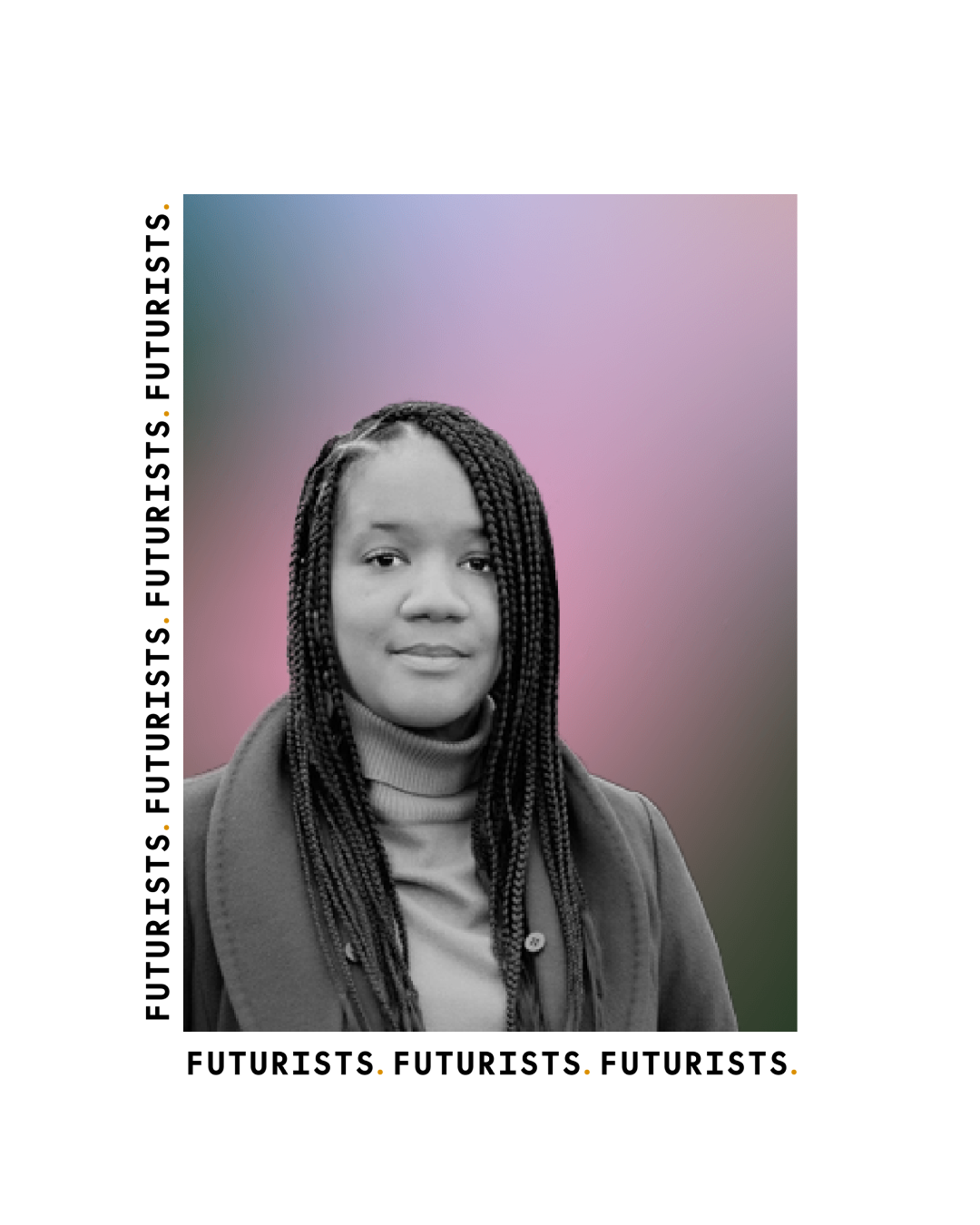
Today we are joined by Robin Rue Simmons, the founder and executive director of First Repair, a national organization that supports communities in advancing local reparations. She previously served as alderman in Evanston, Illinois, where she led the country’s first government-funded reparations initiative. Robin, how do you tell the story of what you do and why you do it?
Robin Rue Simmons: First, thank you very much for having me. I’m really inspired by the work that you’re putting out. The work that I do is repair injustice. It evolved from over 25 years of service in public service, in business, and in advocacy, fighting for the life circumstances of Black people in my village, specifically the Fifth Ward of Evanston, the historically segregated part of the city.
Over years of advocacy for inclusion, Black business opportunity, homeownership, building wealth in various ways, and our overall well-being, in 2019 my work evolved to be defined as reparations. It was very clear to me that reparations was the appropriate legislative response to the terror and uninterrupted plunder we experience hyperlocally in cities like Evanston, and across this nation.
Now that I’ve retired from office, I’m able to do the work outside of government, but in partnership with government, with governments that are ready to do what is right and just. Those are usually governments that have already established a commitment to equity, inclusion, and acknowledgment of Black folks. That first form of repair, acknowledgment, is something they’re already doing, and they’re ready to put action behind their words and get to tangible redress. That’s the difficult and protracted process of reparations.
It’s a privilege to do this work alongside so many inspiring leaders, many elders who carried this work without recognition or compensation for many, many years, and now a new emerging group of leaders who are carrying on their legacy. I’m just grateful to be part of it.
Daydriane Chapman: Thank you so much for that. I want to look back at how that work came to be in Evanston, it being the first city in the U.S. to implement reparations. Looking back, what do you think made that possible?
Robin Rue Simmons: I called the question, and I’m given a lot of credit for the work because of that. I had the revelation to advance it, but it was possible because we had a city of leaders who believed in doing what was right. We didn’t have a blueprint. We didn’t even really have a precedent, because there’s very little example of hyperlocal reparations done this way.
It was possible because we had a body of legislators, the 8th City Council, my colleagues, who believed in it. But first and foremost, it was the residents of Evanston. We’re talking about the stakeholders being Black folks first, but in addition, our allies. We live in a multiracial democracy in Evanston, and let’s be honest, most communities are going to need to get this legislation passed with allies and non-Black folks. So it was important that they believed in the work ahead, that they were willing to learn how reparations is different from ordinary public policy, that they were willing to work with folks they hadn’t worked with before, and to invite in national experts so we could be better informed on the actual best practices of reparations and how it differs from advancing other policy. It really was a community effort, one supported by our elected officials as well as our public administrators.
It’s also important to acknowledge that Evanston has a history of progressive values, being among the first to advance affordable housing, school desegregation, and other important civil rights that have passed in this nation. But reparations is an advance beyond the work we’d already been doing.
Daydriane Chapman: A lot of times when people talk about reparations, they’re really just talking about money, the transaction that’s happening. But your work is a lot bigger than that. How do you explain what reparations really means?
Robin Rue Simmons: You’re right. Even when I entered the reparations conversation, I only had a very narrow view of what remedy is. At that point, you mostly heard about some form of compensation, Japanese internment, the Holocaust, or land back with Indigenous people. But I quickly learned the international standards and the five forms of reparations, which include compensation and restitution, the ones we hear about all the time.
But there’s also the guarantee of non-repetition, or cessation, which is policy reform. Where would we be even if we did get a $12 or $14 trillion redress bill, if we don’t address the racist policy that keeps us racially divided? When we look at satisfaction, we’re looking at how we acknowledge our people, acknowledge the truth in our history, and restore the dignity of our people by restoring our culture and giving us access to it.
Rehabilitation is an area where we’re seeing many communities really demand attention to the trauma we experience as Black people, both the lived experience of trauma, and what we’ve inherited in our DNA through transgenerational epigenetics. The more I’ve learned about reparations, the more I’ve also learned about myself as a Black woman, and about the heritage and culture that’s been stripped away from me. That’s led me to lean further into my own healing and my own self-determination, how I can work with my community through group economics and other shared models so we can strengthen ourselves, multiply our dollar, and heal ourselves through knowledge, wisdom, and understanding, and through various forms of healing, whether that’s food, or our relationship to the sun, moon, and stars. There’s been so much stripped away, and learning that has improved my leadership and my understanding of what full repair really is.
Daydriane Chapman: Are there any stories or examples that stick out to you about the fuller picture of repair, what that looks like, maybe with yourself or people you’ve worked with?
Robin Rue Simmons: A couple come to mind. I’ll share one with myself. It was my work in reparations that led my curiosity to my own origins. It didn’t start here in Illinois, I traced it back to Missouri and Guntersville, Alabama, and before that, to West Africa. Through African ancestry DNA testing, I learned that my foremother was from what’s now Guinea-Bissau, more specifically a Balanta woman. I was able to travel to the Balanta village in Guinea-Bissau and connect with my people there, and it transformed my understanding of myself, my values, what drives me, and what’s possible. It was empowering to be able to say I have an identity outside of this place.
It improved my patience. It helped me understand even more how harmed we are through the institution of slavery, having more grace for our people where we may look at each other as an enemy, recognizing that those are behaviors embedded in us during a period of terror that some of us haven’t escaped. It was really rich for me, and I carry that culture with me. I’m actually leaving for Ghana in a couple of weeks for an ancestor ceremony.
I’ll mention another beautiful story: what will be over 600 Evanstonians receiving reparations. Being a daughter of Evanston, a product of this village, I don’t know when I’ll be able to fully explain what it means to be part of an effort that acknowledged to our elders, my elders, my family members, in some cases, that we as a city were harmful, that we had discriminatory and racist practices, and that we wanted to acknowledge that in word and in deed, with an initial down payment of $25,000 in direct benefit.
To see residents, especially in their 80s and 90s, I’ve met residents over 100 years old in Evanston, who felt they would certainly never receive an apology, who didn’t believe they’d receive any type of acknowledgment or policy change, let alone a cash or other direct benefit from public administrators and their city government directly, that’s given my community great hope. It’s given us more voice. It’s helped restore our sense of place. It’s increased our support for Black businesses and Black leadership. It’s given more attention to Black homeownership and other ways of building wealth and accessing education. There have been so many peripheral wins in this reparations work, including the return of a school to our historically Black community. I could go on and on. The $20 million committed is fantastic, it’s incredible, and it’s more than anyone thought was possible.
But there’s a value add that isn’t being measured yet: the hearts-and-minds work that’s happened for our neighbors who aren’t Black, and how that’s translating into institutional change, policy change, and community relations. I’m looking forward to some social scientists figuring out how to measure that, that’s a goal I have, to measure it and report on it, so folks don’t feel like the check alone, or closing the racial wealth gap alone, is the only form of reparations. These other value-adds to repair, these other forms of reparations, will get us to close the racial wealth gap too. Because once we’re there, we may have different consumer habits, value education differently, have different demands and different priorities.
I’ve learned that the check and the cash benefit, no doubt, are important and are due. But the other forms have been really beautiful and enlightening to learn more about and be part of.
Daydriane Chapman: That makes me think about the moment we’re in right now, where for a lot of people those emotional wounds are being reopened, and the possibility they thought they had is diminishing a bit. How are you feeling about this moment, and what feels most urgent to you?
Robin Rue Simmons: I feel like I’ve been living in this moment as long as I’ve been conscious, it’s just more visible now. There’s less hiding of it, and it’s almost been validated and endorsed by our highest office and the leadership of our current president.
What’s most important to me, and I’m sure this isn’t the answer you’ve been looking for, is leaning into my family and my community right now. Really finding the healing, the grace, the information, inventorying our resources, mapping what our future is, what success looks like, and how we attain and sustain it, making sure we’re organized as a community. That’s what I’ve been doing.
I have so much respect for local government, and belief in it, especially in communities like Evanston that are home rule, some states are home rule, and we have quite a bit of purview. That’s how Evanston was able to pass reparations legislation, where it’s languished in Congress for over 30 years since it was first introduced in 1989. So my household, my block, my village, my city has been my priority as of late, because I believe the more localities do this work, and synchronize our effort, the more progress we make. I’m very focused on my own community while also hoping to inspire other communities to see themselves in Evanston. We’re not an outlier, we’re not unique, we’re not a unicorn, we have the same elements as every other community.
As I go now to over 100 localities across the United States, I try to share the same questions: Who is your legislative champion? Who is your Black historian, whether that’s a formal historian, an archivist, or someone who is a keeper of oral history? Who are your allies? Who is your legal expert who can help you understand what type of laws are viable, and who can prepare a defense? In the case of Evanston, we’re in the midst of a lawsuit right now from a conservative party. And where are your resources, your food banks, your clothing pantries, your rental assistance, your housing support? How can young people mobilize to help elders with snow removal and yard work?
Really thinking about how we care for each other has been a priority for me, while also making sure I encourage folks to vote. We can be discouraged, and we have every right to have grievances against both parties, including the Democratic Party. But the fact is one can be more harmful than the other. For the last several years, I’ve been putting emphasis on voter participation and how we achieve the society we desire by having the right legislators in office.
Daydriane Chapman: I think you have a really beautiful view of it, and because of the support and community you’ve had, you’ve been able to sustain that positivity. I think a lot of people who don’t have that kind of support struggle to. If you could invite people to imagine a world that is fully committed to repair and fully committed to justice, what would you ask them to see, feel, or believe?
Robin Rue Simmons: I would ask them to believe that all things are possible. I believe that sometimes we defeat ourselves because we’ve given up on hope. If we really look at where we’re at today, and this is certainly not an excuse, but look at it this way: if we did not have hope on the plantation, if we did not have hope during the Jim Crow era, if Rosa Parks didn’t have any hope that anything could change from her act of defiance, not getting off that bus, and what it did to activate the civil rights movement, we would not see the progress we have today. So I would encourage folks to lean into hope, and lean into your faith if you’re a person of faith. But definitely lean into hope and community, don’t isolate. And remember that it takes work. Grievances on social media without action offline is just noise. We can organize very strategically online, but the action that happens offline is what matters.
A call to action, whether it’s sharing a meeting link for a council meeting, inviting folks to a block club meeting, or sharing a mutual aid resource, whatever it is. Be hopeful and be active, that would be my words of advice in this day.
Daydriane Chapman: We always close each episode with a what if. And the what if we have today is: what if justice actually meant repair, in policy, in practice, and in our daily lives?
Robin Rue Simmons: If we’d achieved that goal, if justice looked like repair in policy, in practice, and in our daily lives, we would be safe as Black people. We would not experience terror from a traffic stop. As Black women, we would not be concerned that our jobs or resources would be eliminated. As Black children, we would know we have access to education and safe neighborhoods. As elders, the same, we would know we’d have the opportunity to age in place, to be well, and to reflect on a beautiful lived life.
We’re working toward that. We’re far away from it. Our racial gaps seem to be widening. That’s what happened in Evanston when I called the question for reparations, it wasn’t that we weren’t recognized. Evanston is probably award-winning for its diversity, equity, and inclusion, but it still had a nearly $60,000 household income gap, a 13-year life expectancy difference, and incredibly troubling over-policing, particularly in the marijuana space, but overall as well.
Even the best communities among us, and we’re giving out checks; to date, we’ve given out about $6.5 million in direct benefits to residents. It’s incredible. We’ve moved beyond that, but even our city still isn’t getting it fully right. We must remain hopeful, and we must remain active.
Daydriane Chapman: Thank you, Robin, for sharing your wisdom and your vision with us. And thank you all for listening. We’ll be back next time with a new question and new answers.
Robin Rue Simmons: Awesome. Thank you.
Daydriane Chapman: This is What If, a podcast by Common Futurists. What If is hosted and produced by me, Daydriane Chapman. Cover art is by Kat Jaynes. Music is by Sam Barsh and Lunaray. For more What If content, follow us on Instagram at Common Futurists.
The future is in our imagination and in our inbox. Send your thoughts and dreams to whatif@commonfuture.co.