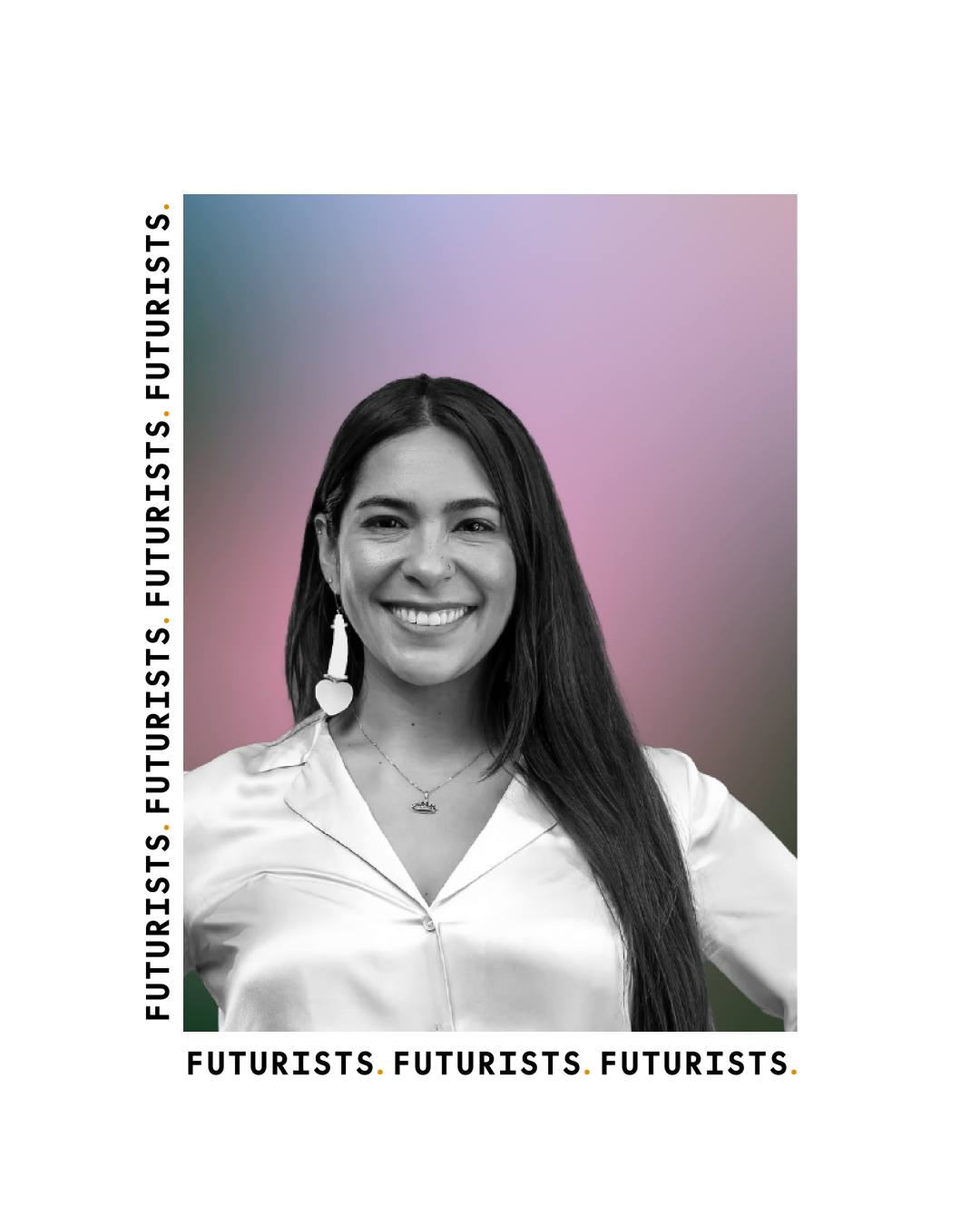
What if we redefined success? (with Jessica Norwood)
Authors: Daydriane Chapman, Digital Strategy Manager
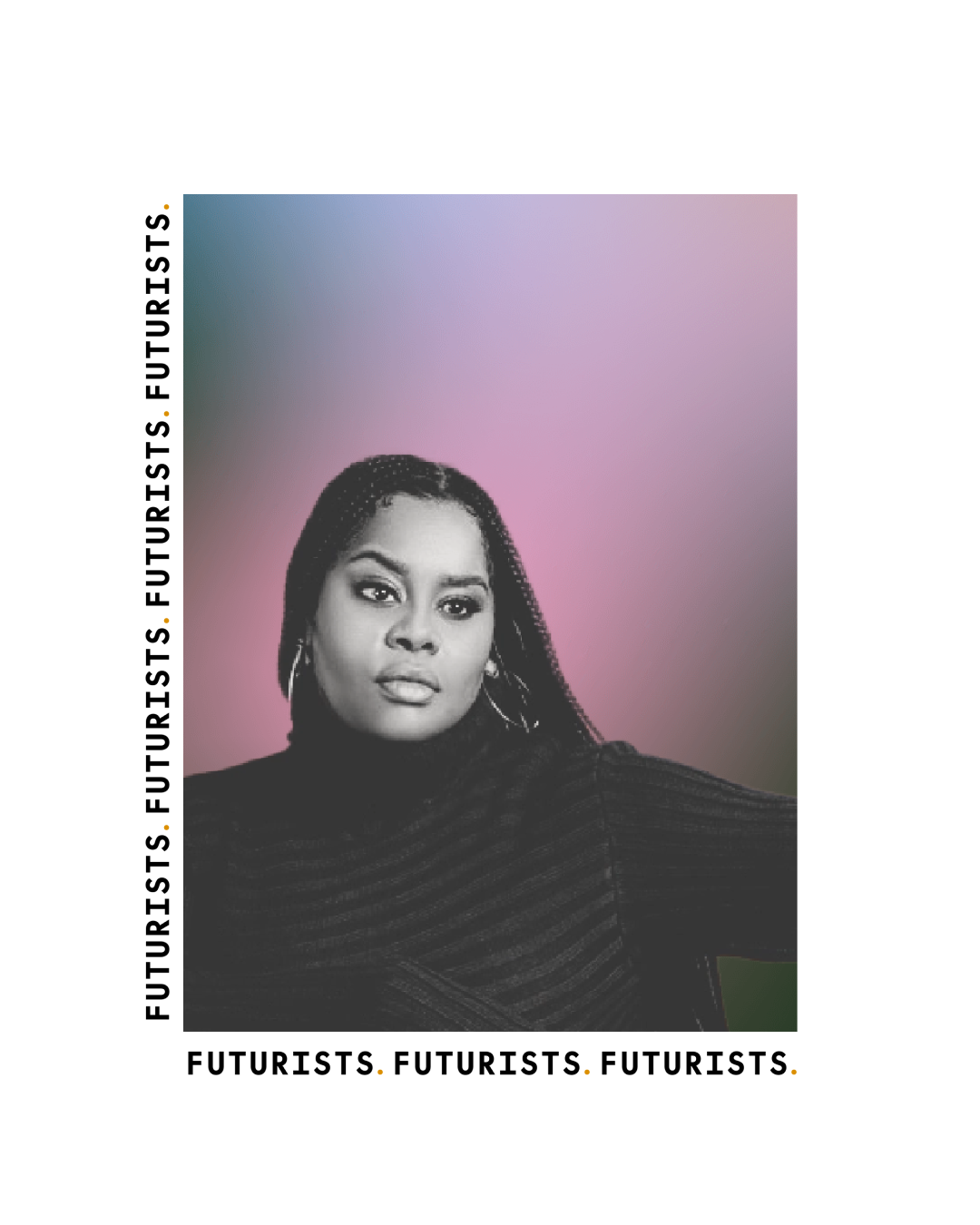
Listen on Spotify / Listen on Apple Podcasts
Daydriane Chapman:
Success is.
Success is the sound of rushing nothing, pulling no strings and allowing them to lay untied,
resting my head on cool pillows and not fearing the morning sun.
Success is the minute you forget about time,
and the second you remember it can’t be wasted.
It’s laying in the sand and not caring about where it ends up.
Success is winning together, and knowing we were never meant to do it alone. My success is yours, even if all we did was hold each other’s hands.
-
We’ve been told success means more, more money, more work, more achievement. But what if success was something different?
This is What If, where we imagine the world as it could be and meet the people building it now. I’m Daydriane, and I’m glad you’re here.
Today we’re asking: what if we redefined success? What if wealth was about giving instead of taking, about sharing abundance rather than holding the weight of scarcity alone?
Before we dive in, a few terms that will come up in today’s conversation. Reparative economy: an economy that heals, one that moves resources toward communities historically excluded from wealth. Relational wealth: value built through trust, community, and shared well-being. Abundance: the belief that there’s enough for everyone, and that success expands when we share it.
So what does it take to make this what if real?
Today we are joined by Jessica Norwood, author, investor, and the founder of Runway, an organization creating funding pipelines for BIPOC entrepreneurs in cities like Oakland, Chicago, Boston, and across the South. Jessica’s work centers on moving resources toward Black joy, creativity, and brilliance, while helping entrepreneurs access the capital and support they need to grow and thrive. Jessica, how do you describe the work you’re doing these days?
Jessica Norwood: Oh my goodness, how do I describe the work I’m doing these days? I’d say I’m maybe a doula, in a lot of ways, birthing a new way. I’m also a shaman, so I’m weaving a lot of spiritual work into this too, as we’ll talk more about what that means.
The kind of finance that I think really resonates with so many of the people we work with captures a much richer imagination of abundance and wealth. Those concepts, and how they link to our soul’s purpose in our life’s work, are things I talk about a lot, the relationships we have to the people and the planet around us, and how the way we invest in one another upholds those kinds of ideals and values.
Daydriane Chapman: That’s beautiful, and I love those metaphors. In your book, you ask, what would it look like if the economy loved Black people? How can this framing shift how we think about success and who deserves resources, especially for entrepreneurs and creators?
Jessica Norwood: When we hold the question, “What would it look like if the economy loved Black people?” we’re doing something really radical, centering those who have been marginalized and exploited in the economy. That’s a radical position to take in a finance conversation that typically centers the return to the capital holder above all things, above the worker, above the community.
There’s a deservedness, a success, I’d say, in just centering oneself. For anybody who’s ever been a caregiver, has parented, has been an educator, has done anything that requires pouring yourself out to others, you might struggle with the concept of centering yourself. In a lot of ways, those of us who’ve been in those spaces have been conditioned to believe that everybody else deserves centering, that we don’t need it, I’ve got it, I’m strong, I can handle it, maybe I’m the eldest in my family and that’s just my role. Whatever way it happens, there’s a radical reframing of your mind and your experience of the world when you are centered. I think that drives a lot of what we’re talking about around success and deservedness, it starts with identifying and centering oneself, and particularly centering those who’ve been excluded and marginalized.
Daydriane Chapman: Exactly. It challenges the narratives we’ve been told about who earns success and who doesn’t. I’m curious, what shift, physically, mentally, spiritually, do you see in people when they really start sitting with that question? Because it is radical, even though it shouldn’t be.
Jessica Norwood: I think there’s space in that to learn new things, and that’s what we really want. There are a lot of ways shame, blame, and fear come into play. The moment you start realizing that you deserve to be centered, that you can do it, those spaces you’re in start to stretch, you’re able to leave that fear and panic zone and stretch into learning something new. That could be new financial habits, new alternatives for investment, all kinds of things. But your resistance and hesitancy start to fall away, and that resistance and hesitancy isn’t something you’ve earned. You’ve earned it because you’ve been in a system that hasn’t loved you. So we understand why it’s there. The counterweight to it is centering oneself, loving oneself enough to believe. Once that opens up, you’re able to learn and do the new things.
I don’t actually think that when people talk about an alternative economy, or a next economy, or a solidarity economy, I call it the reparative economy, that we’re far away from it. I think we’re in it. The deciding factor is being able to really believe you deserve it, that there is a success, an abundance, a wellness for you in this world, in this lifetime. That’s a very radical idea for a lot of folks, and I understand why, when you’ve been so violently excluded and pushed to the margins, you see yourself in a particular way. That’s why it’s so significant to talk about money this way, and to talk about investing in communities and people who’ve been so largely unseen and unsupported.
Daydriane Chapman: It starts in the mind, if you can’t see it, if you can’t imagine it, it won’t happen. You’ve built models that reimagine capital as something relational, rooted in trust. When in your life did you start to realize that the usual story of success, the hustle, the constant accumulation, doing it all alone, endless productivity, was leaving people out, or causing harm?
Jessica Norwood: I wish I could take a lot of credit for this, but I think I’ve always known it. I grew up in Alabama, the daughter of civil rights leaders and entrepreneurs. I knew that the next wave of work was going to be an economic conversation, with America, and around the globe, as many Black and African communities were coming out of colonization and striking their own independence. I knew we were at a moment in the ’60s and ’70s where that was the question, and I was raised as a daughter of that scholarship and that work.
So I’ve always thought that this conventional story of who deserves, who’s worthy, what’s valuable, what makes you wealthy and abundant, wasn’t actually the story I was experiencing as a Black American in the South. I knew, because it’s what I was taught and what I experienced, that community was actually how we achieved success in our areas, people coming together was how we organized and survived, by pooling resources, by creating schools and towns. This story that Black Americans, or immigrants, aren’t pooling their resources, aren’t solving problems in their community, that could not be further from the truth. The resiliency, the resistance, is in community.
I always questioned whether descendants of enslaved people in America could even fundamentally have the same relationship to capital and wealth as others, could I even think about it the same way, growing up in the shadow of the plantations that owned my family? My argument is no, we don’t see it the same way. But it comes back to that earlier point about centering yourself, centering yourself gives you permission to acknowledge that, and then design from a different place. When you ask what it means to design these kinds of funds, or do this kind of work, you start from knowing you’re valuable and worthy enough. You start from claiming your own story, your own narrative, your own experience. My experience has been rooted in the South, rooted in community, rooted in deep relationship to the people, places, and land around us. My belief in what wealth is, and what abundance really is, is driven from that space.
Daydriane Chapman: I think a lot of things, especially as a Black woman, are just intrinsic to me.
Jessica Norwood: It’s a vibe. That’s the thing I’m trying to invite people into, that there’s an Afro-Indigenous way of knowing things. I had a really dear friend who’s since passed away, we were part of Common Future, before it had this name, in its first iterations, when there were these big fellowship programs. His name was J. Bhadhrat Bull, a really dear friend of mine.
I remember when we first came together in our cohort, talking about being the first class of people moving and shaping the next local economies in all kinds of different ways. One thing he said has always stuck with me: in his culture, the wealthiest person was the one who had the least, because they poured it all out, they gave everything away. He lived his life pouring out cultural knowledge, and if you needed a coat, if you needed food, he gave it away. That was what wealth meant to him, pouring it all out for the people and the generations around you.
He wouldn’t introduce himself as just “my name is such and such, and I’m the executive director of whatever company.” No, he made sure you understood the people, the lineage, and the land he came from. He talked about it with such poetry, and I remember thinking, this is where his real wealth is. He was demonstrating what wealth means to him every time he opened his mouth to introduce himself.
That’s my invitation to people. There are some things we just know, and there are things around us that, if you tap into that frequency, that vibration about what really matters, what you could never live without, I can never imagine living without the people, friends, classmates, and neighborhood haunts I used to go to. I don’t want to do without those things, and that becomes what’s important to fight for and invest in. There’s a real through-line between what we instinctively and intuitively know and how that connects to the planet and the relationships around us, an Afro-Indigenous knowing that’s been tried to be extracted from us, wiped out, discredited as just a passing thought while “real business” looks a certain other way. No.
Daydriane Chapman: That ties into something else I wanted to ask. You don’t see wealth as just money, that it doesn’t even matter, really, that it’s a tool for something bigger, something more free and sustainable. What does liberation or freedom beyond wealth look like to you, and what does it feel like with the entrepreneurs and communities you’re building with?
Jessica Norwood: It’s a beautiful question. Right now, and the pendulum swings, there’s no end to wealth, so you could ask me again tomorrow and I’d tell you something new, but in this most immediate time, I think about the Langston Hughes poem about a dream deferred. What happens to a dream deferred, does it dry up like a raisin in the sun? I think about how many people in our communities are so talented, ripe with idea and ambition.
If we looked at this in the most vibrant, holistic way, every person born in this moment is part of the solution to what happens tomorrow in the world we create. They’re part of the fabric that’s necessary. Maybe they’re a good nurturer who took care of someone. Maybe they said powerful words that filled someone’s spirit up. I think there has to be a divine, cosmic reason we’re all here on the planet at the same time.
So I think about wealth as the people whose great ideas are simmering in their hearts, who get an opportunity to see, for once in their lives, hard work and preparation and the moment meet up, and they catch that spark. That’s available to them not just because of the color of their skin, or because they were born into the right family, but because they genuinely have something the world needs, and we want to invest in it and see it become possible. What does that do to change a family? A neighborhood? What does it do to put the confidence inside a human being that they’re worthy, valuable, and needed? That’s the wealth I’m looking for, that’s the promise of Runway, and our work around reparative capital.
Daydriane Chapman: That’s so beautiful, and I can tell it truly comes from your heart. We’re wanting to build things that don’t exist for everyone yet, they may exist for us, but not for everyone. How do you personally practice that kind of imagination, to see beyond what’s physically in front of you?
Jessica Norwood: My expression and understanding of money is that it’s energy. I’m willing to work with it in its formal ways, fiat currency, digital currency, but also as an imagination, a motive current. The energy of where you’re putting your life’s prayers, work, and ideas into it is theoretically what we call money all around the world. In my shamanic way, it’s a totem, a tool holding so much energy. I work with that inside myself, and with other people. I don’t separate the concept of what I’m doing in the investment fund, how large it is, how successful it is, from my spiritual life. I’m in constant conversation with myself, and as I lean into my prayer and meditation, my spiritual life, I’m able to tap into the future, the future me. Because that’s what it is: you’re essentially casting a future. When I’m doing my projections for the business, I’m future-gazing about what could happen in the world. When I’m speaking right now, I’m prophetically saying what I want to be true in the world, and then I walk into it.
I’m constantly in relationship to that idea, that’s how I restore myself, and also how I chart the course. Then I tap in with others: do you see it this way? Because we’re all divining, all getting gifts and downloads in relationship to the plan. How do you see it? We come together on that, and the more of us who keep coming together, the more we make it real in the world, put it into action. I don’t see what I’m doing so much as the future as I see it as the present, this is what I’m living into today, exactly in this moment, and the invitation is to join. It’s not a future ambition. It progresses, the ideas progress, but we’re in it now, we’re doing it now, we’re living into this future now.
Daydriane Chapman: That’s a very energizing idea, that it’s not some far-off thing, or even something we have to think about building. It’s happening now.
Jessica Norwood: It really is. I think, to your point, that intuitive part of you is already happening in you, already manifesting. We learn the practices of how to sit with that and be confident in it. The instructions are: if you center yourself, if you understand how deserving you are, and that the reasons you don’t feel that way are systemic, if we can reinforce that by giving you the gift of technology, business support, resources to lift those ideas, I believe, and this is our theory of change, that you’ll walk into the new next thing, believing it just the way that I believe it. I believe it because people pour into me, people give to me, people love on me. I believe because I’m living it.
Daydriane Chapman: In the spirit of living in it, Jessica, when you think about today’s question, what if we redefined success, what’s your answer?
Jessica Norwood: If we redefined success, I think we’d all be included in the outcome. There wouldn’t be an option where you’re toiling away, but in the end you’re not included in that success. That your survival didn’t depend on somebody else’s demise, or the planet’s demise. That we don’t have to make those kinds of decisions between us, that there’s an agreement that there is enough, and that we can enjoy that enoughness together. That would be success.
Daydriane Chapman: Beautiful, there’s an agreement that there is enough. That’s Jessica’s answer, but there isn’t one single answer. We all build these answers together, and each of us can take a step toward the future we’re imagining together. We’ll meet back here with a new question and new answers next week.
This is What If, a podcast by Common Futurists. What If is hosted and produced by me, Daydriane Chapman. Cover art is by Kat Jaynes. Music is by Sam Barsh and Lunaray. For more What If content, follow us on Instagram at Common Futurists.
The future is in our imagination and in our inbox. Send your thoughts and dreams to whatif@commonfuture.co.