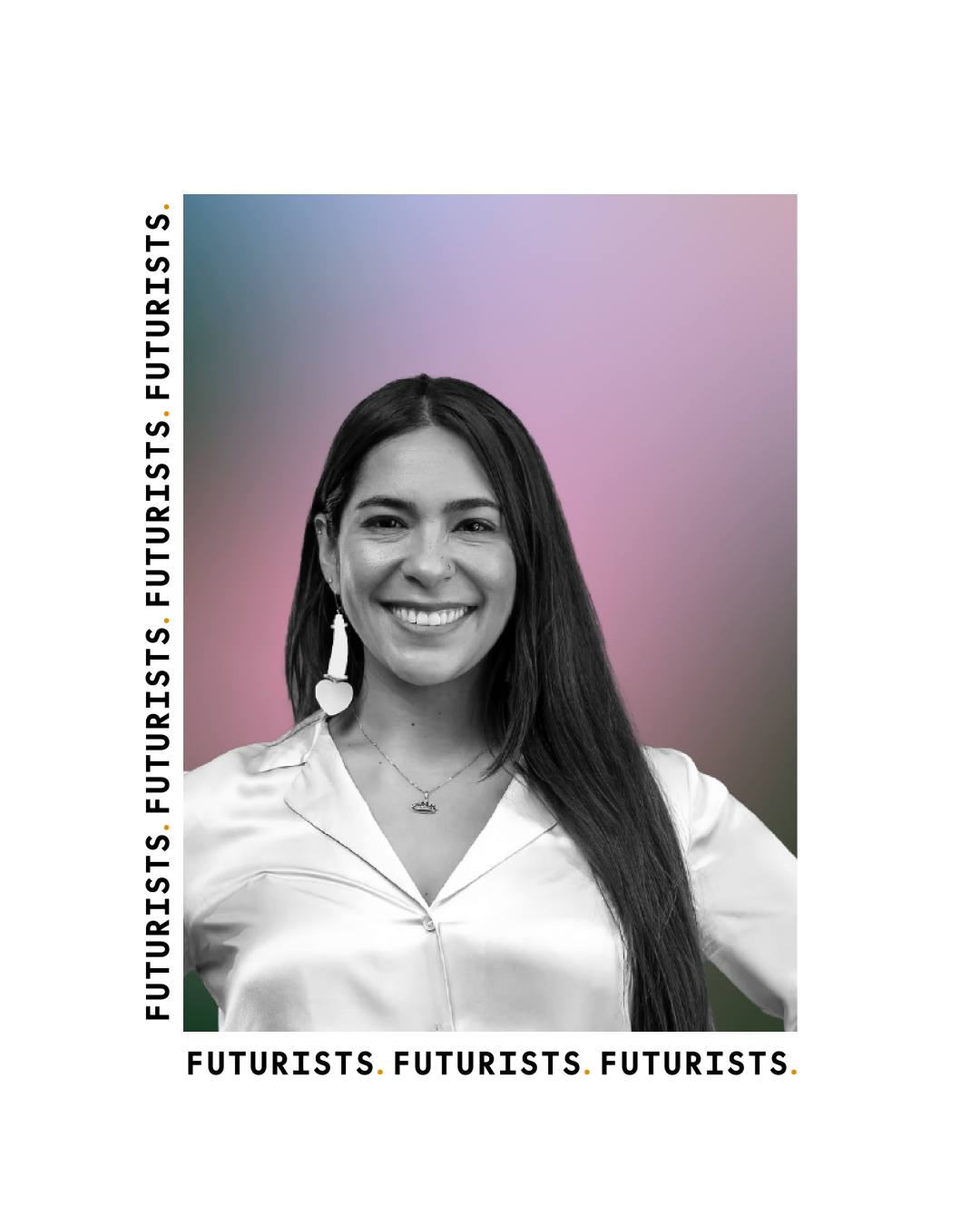
What if we responded to harm with care? (with Danielle Sered)
Authors: Daydriane Chapman, Digital Strategy Manager
Listen on Spotify / Listen on Apple Podcasts
Daydriane Chapman: “Hope is a discipline.” (Mariame Kaba)
Hope is what keeps us choosing repair over revenge. It’s the muscle we build when we decide to keep loving each other.
We live in a world where harm meets punishment, where pain answers pain, where hurt people hurt people. But what if justice looked different? What if we actually knew how to repair what’s been broken?
This is What If, where we imagine the world as it could be and meet the people building it now. I’m Daydriane, and I’m glad you’re here.
Today we’re asking: what if healing, rather than punishment, was our collective response to harm?
Before we start, I want to define a few terms you’ll hear in this episode: multiracial democracy, repair, and restorative justice. When we talk about a multiracial democracy, we mean a society where people of every background have real, equal power to shape the decisions that govern their lives, beyond just the right to vote. It means having resources and representation that actually work for everyone, not just a select few.
Repair is the practical work of making things right. It’s when communities take responsibility for past harm and rebuild trust by restoring what was taken or broken. Restorative justice is a process that centers the needs of those harmed, the accountability of those who caused harm, and the health of the community.
So what does it take to make this what if real?
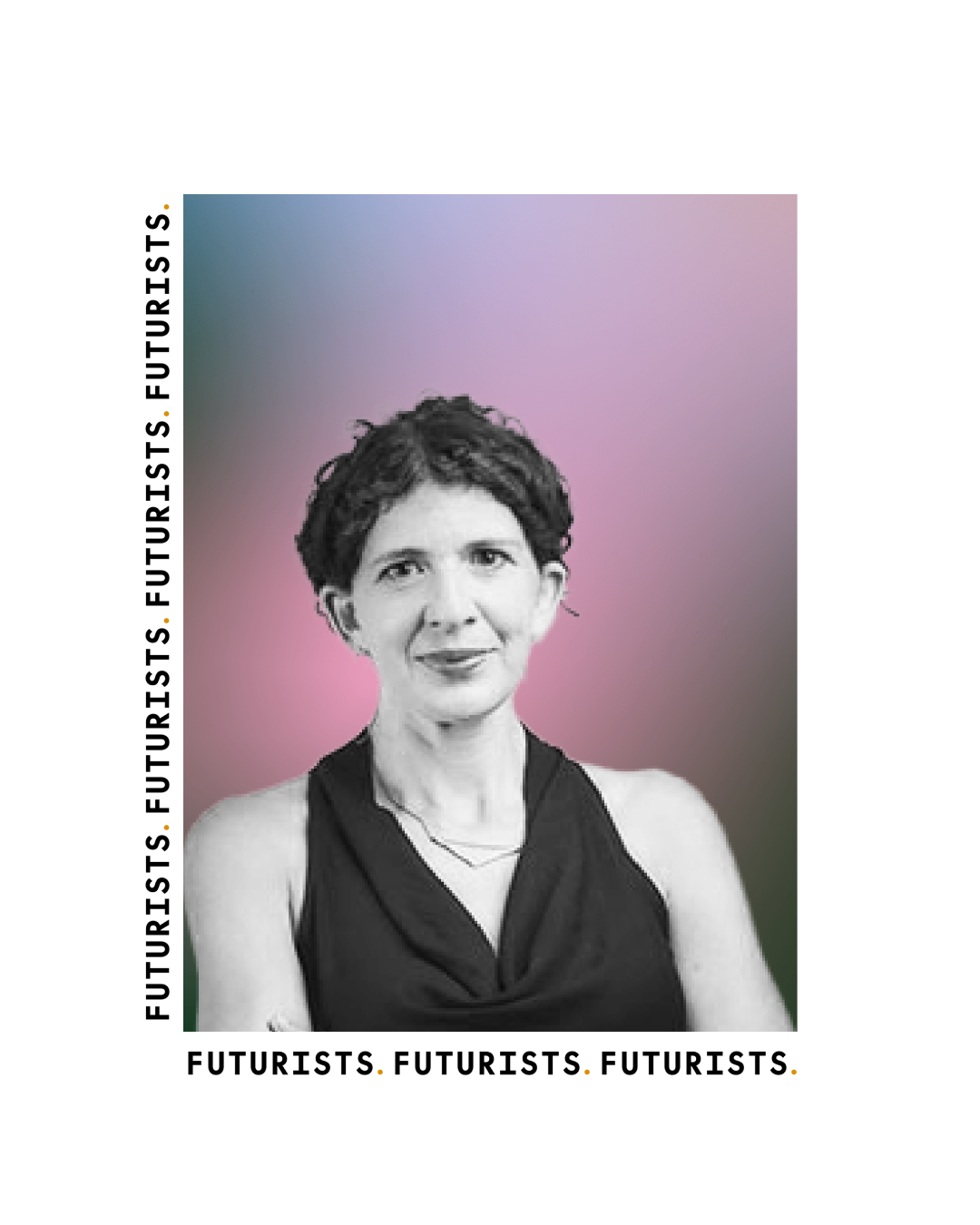
Today we have the honor of sitting down with Danielle Sered, the executive director of Common Justice, where she leads work to address violence in ways that advance racial equity, meet the needs of those harmed, and ultimately move us beyond incarceration. She’s also the author of Until We Reckon, a book that’s been recognized nationwide for challenging how we think about justice and repair. Danielle, I’d love to hear it in your own words, how do you introduce yourself and your work?
Danielle Sered: Thank you so much for having me. That introduction was perfect. We are people who have the enormous privilege of not only fighting against the things in the world that we know do harm, but working in service of building the things we want to see instead.
Daydriane Chapman: Thank you for that. I want to start right where the work is most alive for you. As we look at the landscape of justice and repair right now, which is very rough, what feels most pressing or most urgent?
Danielle Sered: There’s so much that is pressing and urgent, it’s like drinking from a fire hose. I’d name two main things if I had to shorten the list.
One is just caring for the people at the intersection of the greatest challenges and repressions of our time. There are people for whom this is an extraordinarily difficult moment to watch, and there are people for whom it’s an extraordinarily difficult moment to live through. That’s central for me, for the organization, and for myself personally, figuring out how to be in service of caring for and protecting the people facing the worst of what this moment has to offer.
The other piece, zooming out further, is really understanding the intersection and interdependence of the criminal legal system and multiracial democracy. I think it’s easy for people to feel like a fair criminal legal system is sort of nice to have, and that other things are more critical to having a multiracial democracy. I think that’s an enormous mistake. Every time something is outlawed, it comes to the courts to determine whether or not it will be severely punished. We are where movements go when they lose. There aren’t different police for abortion, or different police for teaching DEI in schools, or different police for living a visible queer or trans life. It’s the police we know, the prosecutors we know, the judges we know, the jails, the prisons, the parole boards we know.
We have to understand that the worst harms of these systems require the criminal justice system to enforce them. So whether or not that system does that will have a huge impact on our chances of becoming, and remaining, a multiracial democracy. Stories about fear, about who is dangerous, who is endangered, who should do the protecting and how and why, those are central to the formation or collapse of every democracy. For too long our movement has avoided the issue of violence. Our opposition has not. If we don’t take on the question of violence meaningfully, we will not only fail to end mass incarceration, we will fail to protect multiracial democracy.
And then the last piece is that part of how we take that on, and part of how we protect it, is putting forward an affirmative vision for safety. I think our movement has done a great job communicating how harmful jails and prisons can be to people, that’s important communication, and in some ways the least necessary at this point. A study a few years ago by FWD.us found that one in two Americans have had a loved one incarcerated. The harms of that system are widely known.
What’s less known is what we can do instead. People don’t just fight to have less of a bad thing, that’s not what animates most people. What animates people is fighting for a world they want to live in, one aligned with their values, one where they and their loved ones can have their needs met and potentially even thrive. So I’m obsessed with how we best convey our vision for a world in which people are safe, at a time when the stakes for the uptake of that vision couldn’t be higher.
Daydriane Chapman: In doing this work, holding both the reality of the harm and the possibility of something different, where do you draw from to keep your hope and your imagination intact, especially right now?
Danielle Sered: Such a good question. When I think about it, I don’t think it’s hardship that makes imagining hard. People in the worst circumstances imagine themselves out of it all the time. People did that in slavery. People do it in confinement. That’s not what constrains imagination.
I do think our failure to grieve what needs to be grieved constrains imagination. There’s something in us as people where we can only see as far into the future as we can look into the past. And if that looking into the past is unbearable, it foreshortens our ability to see forward, we can’t imagine what’s to come. So we have to grieve.
The good news is that we’re a long way from eliminating hardship. So if eliminating hardship were required for imagination, we’d be in real trouble. We’re not incapable of grieving. What’s true for all of us is that we’ll each suffer pain at different degrees, based on luck and privilege and structure and all sorts of things. How we make it through will have a great deal to do with how we grieve that, individually and collectively, whether or not we come together in it. I think New York City’s failure to grieve its losses from COVID is responsible for a lot of the difficulties our city is undergoing now. We have to grieve together. That doesn’t have to be a program, it doesn’t have to be a therapist, programs and therapists are great, I love many of them, but I think when we take time to grieve together, it reopens our capacity to imagine.
Daydriane Chapman: That makes me think about the erasure of history happening right now, and how we’re changing the way we talk about our history because people don’t want to acknowledge or deal with the consequences. What are your feelings about that, and how does it relate to how we grieve?
Danielle Sered: I wrote a book called Until We Reckon, so my feelings are pretty strong. I don’t think there’s a way forward except by dealing with our past. This current political moment could not be a stronger argument for it. The argument we’re having as a nation, we had it in 1965, we had it in 1865 and soaked the ground in blood, we had it in 1619, we kicked it off in 1492. There has been a long-standing question of whether America wants to be a multiracial democracy, and it is not yet answered. Some part of me thinks that’s the only fight we’re ever having, that’s always the fight. Here we are in this moment, having very overtly, very explicitly, the fight that has always been ours.
I believe there’s no way through it except by telling the truth to and with one another, and carving out pathways for repair. Repair is not just punishment, it’s not the degradation and violence toward people who have caused harm, or whose ancestors caused harm. But it’s also not just apology. It’s not a group of people saying “my bad” or “our bad” and moving forward. It’s repair, figuring out what we could do to make things as right as possible, beginning from a shared assumption that we’re going to continue to belong to each other, and that we’re not going to murder one another.
Those are open questions for us as a country right now. For many people, those questions are asked and unanswered. But if we decide we’re going to continue to belong to each other, and simply because enough of us aren’t leaving, we are, and if we decide we’re not all going to murder one another, which is where we’re mostly landing, then how do we move forward? To me, there’s no way forward except through repair.
I think there’s something about the overtness of this moment’s conversations that is very honest. I like honesty. Every good transformative process I’ve been part of has started with people telling the truth. There’s a ton of dishonesty about our history, the erasure you’re talking about, the pulling down of websites that say true things, the removing of things from museums. But there’s also a broader honesty now about the questions and intentions of who we want to become, one that has always needed to be named. And here we are.
Daydriane Chapman: Here we are. I’d like to know, how has your thinking about responses to harm changed over the years? If you could talk to a younger, less experienced version of yourself at the very beginning of your career, what would you say?
Danielle Sered: I think I understood well the systems that cause harm and their failure to protect and heal people. I learned that as a kid, as someone who survived violence, as someone who committed violence, and as someone who first came to understand the inequities of the criminal legal system as someone who benefited from them, as a white kid, in ways the Black kids I loved did not. So I wasn’t confused about that, which is a great gift, it’s a great gift to not be confused from early on. I benefited from incredible elders who taught me things I needed to know to understand my world, not just individually but structurally, to see through the matrix to how things actually operate.
But I think at the beginning of my career I overestimated how much it would help to be right. I thought we could do a lot through facts and persuasion, that data would help. Data doesn’t help. Particularly, data doesn’t help in the face of fear, and it doesn’t help in the face of racism. When we try to use data to combat fear, if my kid said he thought there was a monster under his bed and I said, “Baby, there’s a 98% chance there’s not a monster under your bed,” nobody’s sleeping. That doesn’t work. But if I ask, “What do you know about this monster? Is it angry, or is it sad? Is it hungry? Does it want to eat you, or just eat something? Here’s a special magic wand I made you that makes the monster chill out”, if you inject curiosity, put people in relationship with someone who will fight alongside them against the thing that scares them, people sleep through the night. You don’t combat fear by telling somebody they’re stupid to be afraid, which is most of what I think our movement has done, to great detriment, where we could have otherwise succeeded.
I think we’ve alienated ourselves from people who have experienced harm, or fear experiencing harm, and those are, in fact, the people with the most at stake in us doing things better. Not the people worried that harm happening elsewhere might penetrate their protected enclave, but the people who face the threat or reality of violence day in and day out. I think we’ve failed to align with many of them by minimizing the reality of their fear and treating it as stupidity rather than as a legitimate emotion.
I thought facts would work in a lot of contexts, and I don’t think facts outweigh fear. I’d never bet on them in a fight. I also thought we could do a lot more to persuade people in the system, that if we provided beautiful facts and told beautiful stories, we’d move hearts and minds and people would make different choices. Occasionally that happens. But what a dear mentor taught me is that you don’t win because you’re right, you win because you’re strong. At the time, that was bad news, because we were right but not strong, it was not a welcome insight when he shared it.
I believed too much that individual actors with power in the system had to be persuaded, just as people, and I think they do. But you also have to account for power. You have to organize, understand how power operates on them and how their power operates, and change their calculus of whether they risk their job by doing what you want. For people who want to do the right thing, that means providing sufficient protection that they won’t become unemployed for doing it, because most of them want to do ten good things, and they figure if they do this one good thing and lose their job, those nine other good things don’t get done, so it’s not worth it. For those who don’t want to do it, you have to put pressure on them. Either way, you don’t actually need to know their hearts, what you have to do is stand behind them and move forward. If they’re doing the right thing, anyone who tries to come at them from behind has to come through you. If they’re not, they’ll be stampeded. You meet a group of people moving forward behind people with power who can do things the same or differently. I really overestimated persuasion, specifically of system actors, not narrative and culture, but people in power, when that persuasion happens in the absence of a real analysis of how power operates.
Daydriane Chapman: I want to talk about how we can change our perspective on healing and what it looks like. A lot of us are taught that if you’re sad, go to therapy, take a walk, touch grass, it’s framed as something you do by yourself, because it’s your problem, very individual and personal. But a lot of communities carry wounds too, especially Black and brown communities. What has collective healing looked like for you? What do you think it should look like in places impacted by systemic harm?
Danielle Sered: I don’t know anyone who’s healed deeply alone. There is a deeply personal, individual dimension to collective healing, things you have to do in your own heart, in your own body. There’s a dark place you go where no one else is, and you have to figure out how to move out of it. Sometimes you’re lucky enough that someone reaches down and pulls you up, best case, someone just drags you up. Sometimes you have to claw your way up until you’re within reach of their extended hand.
I don’t mean there’s nothing personal and solitary about healing, because part of what trauma and loss do is make it feel like they rip us from the fabric of our connection with one another. They separate us, isolate us, leave us unprotected. When we lose someone we love, we lose a relationship, very concretely, it’s made of separation. But healing is the process of finding a way to be woven back into the fabric of community, the fabric of relationship, the fabric of love. That means it’s always relational, always in context.
At its best, it’s also historical. The people who help you most to heal are people who have healed, and they healed because the people before them healed too, they found a way. One of the only reasons people believe they can heal is that they see others who have. That’s a historical move, everybody still standing is evidence of its possibility. It’s a historical practice, and we don’t do much of it by ourselves. It’s never been individual. We heal together, we protect each other, we build power together.
We did a project, brilliant researchers and people in our movement, together, where we developed a scale to measure healing, because all the existing healing measurements are diagnosis-based and mostly quite strange. They ask things like, “How many times in the last 30 days have you felt blue?” What does that even mean? All the other questions are equally strange, and they didn’t work to measure our work because they didn’t connect to the culture of our participants. Most of our participants, who were men, overstated how fine they were. Most people didn’t want to be forthcoming about what was being asked. The most common response among people whose experience of violence has been minimized or made to seem unimportant, culturally, is to express numbness.
Numbness is actually one of the scariest symptoms of trauma, much worse than the ones that involve feeling. If your foot hurts because you were in an accident, that’s bad. But if your foot doesn’t hurt at all, that’s terrifying, you’re talking about paralysis. The moment you feel pain in your foot is a moment of celebration, because it means you’re still in it, you still have that limb, that part of your body. But numbness shows up as “no, I don’t feel that, I don’t feel that, I don’t feel that”, you come through appearing fine. None of those measures worked.
So the project started with the question: what if, instead of measuring the absence of trauma, we measured the presence of healing? A group of people got together over the last five years to talk first about what healing looks like, when you see healing, what does it look like, what are you seeing? The scale that emerged asked questions about people’s ability to say things like: I don’t blame myself for what happened to me. What happened to me connects me to others instead of separating me from others. I believe I deserve to heal and can heal. I believe I deserve to ask for help. I am capable of feeling joy alongside my sorrow.
Unlike other scales, this one doesn’t assume there’s one calamity and then measure how you do coming through it, which is almost no one’s life, and certainly no one’s life in communities that are oppressed in this country. Nobody has just one bad thing happen. Healing, and all those dimensions of it, can continue to grow and develop even as people experience additional intervening harm.
One of the things that emerged from the scale, which relates to your question, is how many of those markers of healing are relational: Can you talk to people? Are you with people? Does this connect you to people? Do you laugh with people? Do you want to be with people? Do you tell people? When we did the scientific validation, the gold-standard research-level work, it turns out those things do correspond to reductions in trauma symptoms, which all of us know in our lived experience and in our hearts.
Daydriane Chapman: I love that. What was the name of the study again?
Danielle Sered: We always just call it the healing scale, but it’s officially called the Community Scale for Healing Possibilities.
Daydriane Chapman: Thank you for sharing that. So, we always close each episode with a what if, and we’ll end here: what if healing, rather than punishment, was our collective response to harm? What might that world feel like, look like, sound like?
Danielle Sered: What a question. That’s such a far distance to imagine. I think one of the most central things is that it would feel like repair, like things that are broken can be mended. We could be less afraid of being hurt, because healed people heal, and hurt people hurt people, if you interrupt those cycles, the total amount of harm reduces. But even more than that, we’d be less afraid of being hurt because we’d be more certain that if we were hurt, we would come through it.
I think it would feel like belonging. Belonging isn’t just about feeling included, it’s about feeling connected to a larger whole, where what happens to you matters and changes the whole, and what you do can change the whole too. We have to always remember that high levels of violence aren’t inevitable, inequity creates violence, prison drives violence. Those are choices we make, policy choices, and we could choose the opposite and live in a world mostly without it.
But most central to me is really what it would look like to have a culture of repair. If we all think about a time something was done to us and someone got away with it, we can think of a million examples. If we think of a time someone did something to us or someone else and was punished, we can think of a million examples. But if we think of a time someone did something we believe was wrong and repaired that harm, a lot of us come up with almost nothing, especially once you take a boyfriend bringing roses off the table. We haven’t developed this muscle of repair in our culture. I don’t think a body without a capacity for repair can survive. I don’t think a relationship without a capacity for repair can survive. I don’t think a movement without a capacity for repair can survive. And I don’t think a nation without a capacity for repair can survive.
So for all the urgencies of this moment, when you start asking what’s the top-of-mind thing, there’s so much we have to do to protect each other, somewhere alongside all this other fighting, I think we have to build our muscle for repair. Because I don’t think, long term, that we make it without it.
Daydriane Chapman: Thank you, Danielle, for sharing your vision with us. And thank you all for listening. We’ll be back next time with a new question and new answers.
Danielle Sered: Thank you so much for having me.
Daydriane Chapman: This is What If, a podcast by Common Futurists. What If is hosted and produced by me, Daydriane Chapman. Cover art is by Kat Jaynes. Music is by Sam Barsh and Lunaray. For more What If content, follow us on Instagram at Common Futurists.
The future, in our imagination and in our inbox. Send your thoughts and dreams to whatif@commonfuture.co.