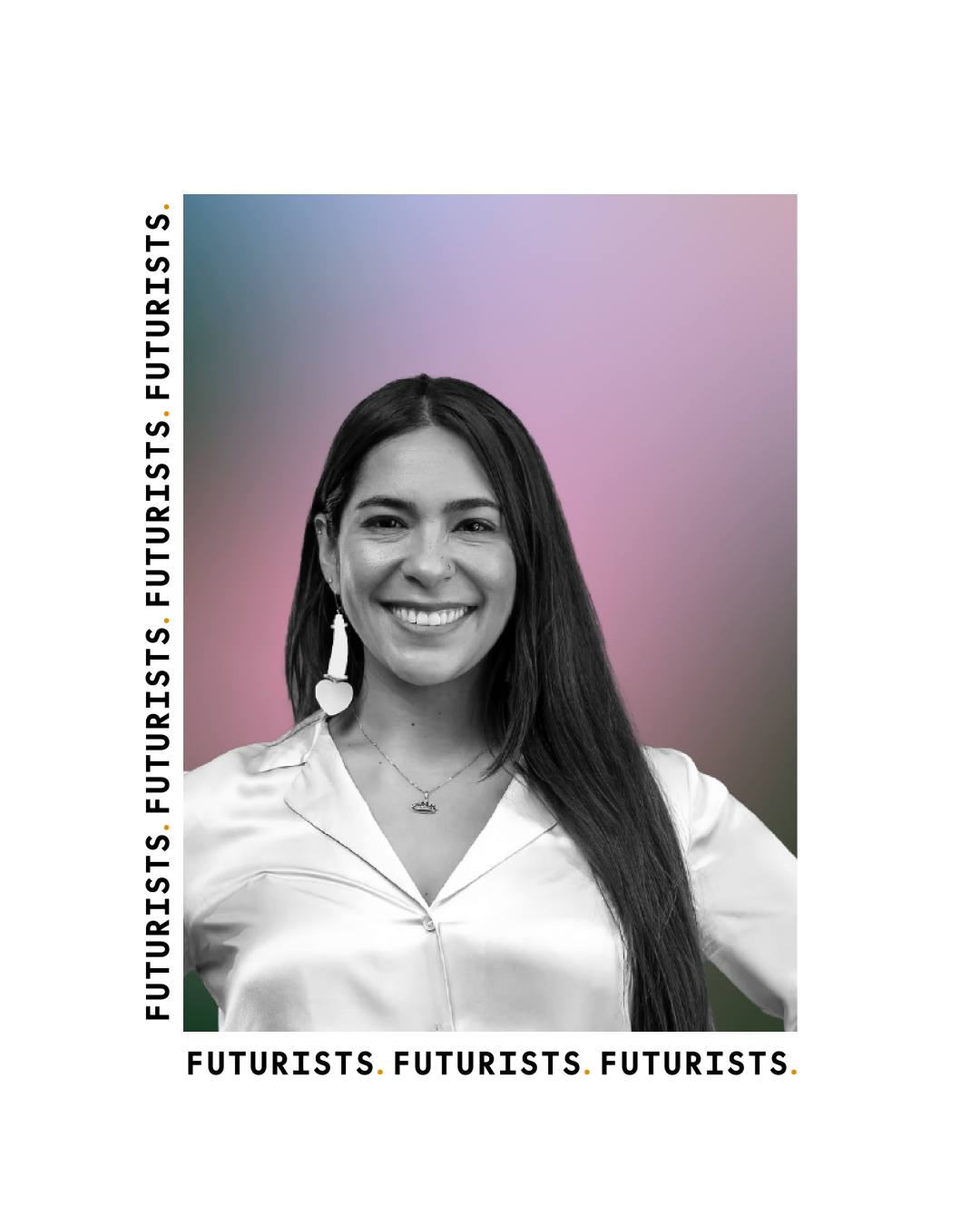
What if our climate was in harmony with itself again? Featuring Futurist-in-Residence Cheyenne Kippenberger
Authors: Daydriane Chapman, Digital Strategy Manager
Listen on Spotify / Listen on Apple Podcasts
Daydriane Chapman: “To love a place is not enough. We must find ways to heal it.” (Robin Wall Kimmerer)
Climate on our planet is changing faster than our systems can respond. Our rising temperatures and unnatural disasters are treated as environmental problems instead of human ones. But what if climate wasn’t something to manage or survive? What if it was a relationship we were responsible for stewarding?
This is What If, where we imagine the world as it could be and meet the people building it now. I’m Daydriane, and I’m glad you’re here.
Today we’re asking: what if our climate was in harmony with itself again? And what does it take to make this what if real?
Today we’re joined by Cheyenne Kippenberger, the Policy and Advocacy Futurist-in-Residence at Common Future. She’s a citizen of the Seminole Tribe of Florida and the founder and CEO of CK Tribal Consulting. Cheyenne has spent nearly a decade speaking and advocating for Indigenous communities, centered on mental wellness, civic engagement, and environmental protection. Cheyenne, I’ve read your bio, but if someone just met you for the first time, how would you introduce yourself and tell them what you do?
Cheyenne Kippenberger: I’d probably start with my name. Cheyenne is my English name, but my given traditional name is Eset, which in English means “fire”, given to me by my maternal grandmother. I’d definitely stress that I’m a citizen of the Seminole Tribe. That’s a huge part of my identity and who I am. I was raised on my reservation in Hollywood, Florida, and I still live there today. I love where I come from, I love my community, I love the culture I was raised within. I’ve indirectly found this really beautiful way of giving my life and career to that. So I love what I get to do.
Daydriane Chapman: Everything in your work comes back to your relationship with land. What does harmony with the earth feel like to you, in your homelands?
Cheyenne Kippenberger: Being part of my tribe, it’s been ingrained in me since I was a little girl that our identity is closely intertwined with the land we come from, and it’s mirrored in every part of our culture, our language, the dances and songs at our ceremonies, our arts and crafts, the materials we use from the land and the things those materials depict.
When I think about what that harmony looks like in my own life, it’s really this recognition that we’re all part of it, this larger balance, this larger picture, and that we each have a responsibility to it, inherently. The health and well-being of people is a direct mirror of the health and well-being of the environment. So harmony looks like a balance of reciprocity, of exchange, and a big acknowledgment of where we, as human beings, fall into that balance, and the responsibility we have.
Daydriane Chapman: That’s also a nod to Indigenous wisdom, speaking of the earth as a relative, as kin, not as a possession or something you own. How does that framing shape the way you understand your relationship with the land?
Cheyenne Kippenberger: I had a really beautiful upbringing. My reservation is right in the middle of the city, between Fort Lauderdale and Miami. Growing up, the area was somewhat of a cow town, I remember them building a Target near us, I remember things getting developed, townhouses, homes, shopping plazas. But alongside that, I had this unique upbringing of going out into the Glades and the woods, we played outside, swam in the canals, went hunting, rode around. I loved being outside as a kid with my siblings and cousins. I watched my grandma and my aunties cook on the fire the way our people always have. It was so communal, so ingrained in the culture.
I always understood it to be something we enjoyed right now, but also something important to maintain for future generations to enjoy too. It’s a little sad thinking about that. I have a little brother who’s 16, and his entire upbringing has been completely different from mine. There’s one specific area on the Brighton Reservation where we used to swim, and we can’t go in that water anymore because it’s polluted. There are animals I saw growing up that aren’t there anymore.
That wisdom you’re referring to is really an understanding that our time here is temporary, and in that temporary time, we need to take care of what takes care of us, what provides our food, our water, our sustenance, our housing, not just to take care of it, but to try to leave it in a better state than we found it, for future generations. Ownership of land, commodification of natural resources, that’s never been a way of life for our people. The idea of owning land is kind of insane when you think about it. You can’t take it with you. It’s just for right now.
I almost feel a sadness for people who view the land, the world, animals, plants, and water that way, rather than understanding them to be relatives of ours. Everything has life, plants are living beings, water is a being. Everybody deserves to enjoy the environment, to enjoy recreational activities outside, to have access to green space, to have a relationship with the land. When we’re forced into lifestyles surrounded by concrete buildings, roads, and asphalt every day, it severs people’s relationship with the land. Once that wedge is created, it’s hard to reconnect, to know where their food came from. People used to know where their milk came from, where their water came from. People don’t know anymore.
A lot of the work I do is around public education and awareness, teaching people why it’s important to care about the land, why policy matters, and why what my tribe and other tribes are doing matters to the long game, to long-term sustainability, because everybody has the right to enjoy the natural world, and we should be maintaining it for generations, thousands of years from now, to enjoy as well.
Daydriane Chapman: I love how you brought up the difference between how most people think about the earth, how extractive it is, without thinking about the people who’ll come after us, and how mainstream climate conversations are so numbers-based: we’ve got so many minutes till midnight, and so on. It seems like everyone has a vague or different opinion about what we’re doing to the earth. What changes about the conversation when Indigenous knowledge leads it, or is centered?
Cheyenne Kippenberger: I agree, the mainstream conversation around climate change, and the environmental sector at large, is very technical, and I think that’s a big turnoff for people. It turns into a numbers game, we have so many minutes, we have to track carbon, there’s urgency, and it’s uncomfortable and scary. People don’t want to be uncomfortable; that’s just a natural reaction.
The reality is climate change is very urgent, and it’s something we should have a kind of panic around, but a panic that makes people care, that makes them want to mobilize and come together collectively behind action, rather than turn people away entirely, thinking, “I don’t want to think about this because it’s scary, so I’ll just ignore it.” The conversation instead can be one that makes people feel empowered, like they’re part of the solution, part of the mission of progress and sustainability, of a future where people can go outside and be safe, not worry about heatstroke or extreme cold, and have access to healthy, clean water and food.
There’s a framing we could better focus on, drawing from Indigenous knowledge systems: one, that we do have power, and empowering people starts with educating them. There was a really great campaign down here to teach people why the Everglades matter. Like I mentioned, most people don’t know where their water comes from anymore. They conducted surveys asking people across South Florida, “Do you know where your drinking water comes from?” Most people didn’t know, or they’d say something like, “I just turn on my faucet, and I know I have water because I paid my water bill.” It was an opportunity for people to learn that more than 80% of our drinking water comes from the Everglades. People don’t know what an aquifer is, or the function of the Everglades. When you teach people that the Everglades is a natural filtration system, the way we think of the Amazon rainforest as the lungs of the earth, you can think of the Everglades as the kidneys, I nerd out over this stuff because it’s so cool. The same way it’s kin to us, you can view it as a mirror of ourselves, or ourselves as a mirror of the world. All these large ecosystems serve a purpose we benefit from, when we protect the Amazon, the Everglades, these bodies of water, these large areas of land, specific animals, it benefits us as people.
I think about that severance of relationship people have with the land, and I always encourage people, whether they’re from Florida their whole life, just moved here, or are just visiting, go visit the Everglades. It’s hard to get people to care about something, let alone advocate for it, if they don’t know anything about it. From the earliest societies that ever existed, people had relationships with the land they were in. You can go out to the Glades and experience the birds, the animals, the plants, the water, even get away from the smells we’re used to living in the city. It makes you feel alive, makes it easier to want to care about the Everglades, it’s about humanizing the balance that has always existed in the world between people, plants, water, and air. There’s beauty in that relationship that’s existed since time immemorial, and Indigenous people have not only been masters of the lands they come from, but have always been open about sharing the traditional knowledge systems developed over literal centuries, a stewardship whose foundation is kinship, the fact that we’re relatives to the land the same way it’s a relative to us. There are intentional practices of long-term systems sustainability, like agriculture that doesn’t destroy soil composition. It’s evidence that there’s a way to live in harmonious mutualism with the land, because we’ve done it before. We know it’s possible.
Daydriane Chapman: That makes me think about how people don’t understand the significance of our interdependence on each other. I’d love to hear you talk about what benefits we get when Indigenous tribes and communities get their land back, that’s significant for them, but for all of us too, and I don’t think people think about that.
Cheyenne Kippenberger: That’s a good question to sit with. The idea of climate change is scary, intimidating, uncomfortable, but for a lot of Native communities and Indigenous groups, we’re at the forefront of its effects. We’re not only on the front lines of trying to battle it and reverse it, but my community, there are two tribes in Florida, the Seminole Tribe and the Miccosukee Tribe, ancestrally, this is where our people have always been. We’re seeing the direct effects of climate change, so we don’t get to ignore it.
More non-Native people are starting to realize how in-your-face climate change is. There’s a quote going around on social media that climate change is going to turn into people recording things happening around them, watching the videos, saying, “My God, I can’t believe that’s happening,” until it’s happening to them literally. We’re seeing floodings, natural disasters getting more intense, damage getting worse, communities getting displaced. It can seem like an issue that doesn’t affect you until it quite literally is. And that interdependence with the natural world goes back to the interdependence we have as people.
It can be hard to be open to these ideas or discussions when you’re not in spaces where they’re talked about. I can’t tell you how many times I’ve had people say, “Wow, you’re the first Native person I’ve ever met,” and I think, I’m probably not, but hey, we’re here, cool. Ancient knowledge systems and relationships to the land aren’t normal topics of conversation for a lot of people. It’s a challenge to get out of your silos, your echo chambers, and open yourself to new perspectives, new experiences, people from different backgrounds, socioeconomic, geographic, because that’s the only way to have an exchange where we can build solutions based on real experience and knowledge systems we know to work.
I encourage people to question everything we’ve been conditioned to believe, from social norms to cultural norms, it hasn’t always been like this. We’re coming up on 250 years next year that the United States has existed. That can feel a little strange to think about, but when I give presentations, sometimes I introduce myself and my language, and I say, my language is older than the United States. The ceremonies my people practice, our songs, our dances, older than the United States. It’s a challenge people have to take on themselves, to reject the conditioning we’ve been forced into and be open to different ideas, different perspectives, different solutions, a different way of doing things.
Daydriane Chapman: I think so too, colonialism and capitalism are new. Treating the land as kin is what people have always done. I’m glad you said that. And to your point about people saying you’re the first Native person they’ve ever met, you do narrative work around how people see Native and Indigenous communities. What kind of stereotypes, myths, or misunderstandings do you still find yourself up against today, especially around environment and land?
Cheyenne Kippenberger: I joke that this is the “101 presentation,” because until you go over these foundational pieces about the narratives around Native and Indigenous people, people can’t really deep-dive into the issues, they have to understand us as people first. We are traditional people navigating a modern world. We carry knowledge systems that surpass the existence of the United States. We are diverse people, this whole idea of a single “Native American culture” isn’t real. There are 574 federally recognized tribes in the United States, and federally recognized just means they’re acknowledged as sovereign nations by the federal government. That doesn’t include state-recognized tribes, tribes with no recognition at all, or the many thousands of tribal communities that existed before attempted genocide happened.
The diversity within the Native community is really hard for people to understand. Down here in South Florida, there are only two tribes, so there’s very little day-to-day interaction for people to feel like they’ve met tribal citizens, compared to somewhere like Oklahoma, where there are so many tribal nations that it’s a lot more normal to see Native culture around you. With all those tribes in existence, every tribal community has had a different experience with the government, not all of us have signed peace treaties, not everybody has had the same negotiations, there are different relationships at the state and federal level. From a government-to-government perspective, that can look very different tribe to tribe. Different languages, traditional clothing, dances, songs, traditions, stories passed down. We are not one big group of people, we’re very diverse, and we look very different.
I think we’ve gotten pigeonholed into a narrow set of representation, very Plains-focused, everybody assumes we all have specific facial features, high cheekbones, long dark hair, that we’re all on horses wearing war bonnets. My people are from the Everglades, there were no horses down here until the Spanish brought them. Even skin complexion, people assume we’re all just “brown,” but we all look really different. In Florida, we’re probably a little darker than people up north who don’t get sun year-round. These things can feel silly, but something that small can make a really big impact in how our people are treated.
We look different, talk different, have had different experiences. I always get asked if we pay taxes, I’m like, I’ll go to prison just like you if I don’t pay taxes, we have to pay taxes. There’s this idea of free education too, I have student debt like everybody else, I had to navigate college admissions, I didn’t just get in because I’m Native.
It can feel silly, and it’s funny to talk about and laugh about, but these things have impacted our people in a really negative way. It can hurt us in our day-to-day experiences, how people interact with us, how we’re viewed. There’s now research backing up how these stereotypes and misconceptions greatly affect how we view ourselves, so much so that Native youth have the highest rates of suicide of any demographic. It’s related to the dehumanization our people have experienced, getting reduced to mascots, to racist cartoons, and even the more dominant narratives through media, like Pocahontas, that whole Disney story is a lie.
That’s why I encourage people to question everything, to be curious, to ask questions. I try to be open when I get the opportunity to educate, because uncomfortable conversations lead to understanding. We’re up against a curriculum that isn’t always accurate or authentic, so when I get the opportunity to share, I take it to heart, because education wasn’t always granted to our people either. I take it as an opportunity to do right by my people, to share real, authentic history, our perspective, our culture, our ways, because we’re up against a vision of our people that’s existed for a long time. That can be tough, but I’m stubborn, just like my ancestors were, so I’m willing to do it.
Daydriane Chapman: That was beautiful. Speaking of what you go through as a community, the work you do carries a lot of grief. You’re educating people, which requires talking about history, and if you can’t talk about the truth of something, especially our history as a country, there’s no way to make real progress. How do you hold onto hope while witnessing so much loss, maybe even reliving it by talking about it? How do you keep going?
Cheyenne Kippenberger: It can be tough. I’m human, I have feelings. I carry a lot of what my people have experienced, we can talk about intergenerational trauma, intergenerational patterns passed down through our people, and that’s very real. It’s an experience communities of color hold in one way or another. It’s important to acknowledge the truth, to discuss it: our country was built on the attempted genocide of one group and the enslavement of another. That’s uncomfortable, but it’s the truth. If we can’t acknowledge that, can’t have conversations about what’s embedded so deeply into the fabric of our country, we can’t acknowledge the other issues we’re trying to take on, social issues, environmental issues, human rights, because the very mindset that led to the creation of this country still exists today.
I’ve said it more than a few times, these things can come off as silly, sure. But when we’re talking about young kids taking their own lives because they don’t feel like valued, respected human beings, that’s not silly. When we’re watching communities that have always been historically targeted and marginalized continue to be marginalized, losing access to healthcare, losing access to food, going through voter suppression, being economically marginalized, that’s a problem. Is it exhausting? Absolutely. I’m in full recognition of the literal emotional exertion that comes with talking about these things. But I also recognize that this is a skill I was given. I feel a responsibility to serve a purpose it took me time to discover, and when I did, I sat with it and thought, this makes me feel good. I appreciate the gifts and skills I’ve been given, and this is what I believe I’m meant to do.
I have my moments where I have to do a mental health check on myself, it can be difficult, but I lean on my community, my family, my friends. I’m appreciative of the support system that’s carried me through these last 10 years of what’s now my career. I feel really lucky to have discovered this space, to get the opportunity to get in front of people, talk, share, and educate, and that’s what I get paid to do. That’s beautiful in itself. It’s taken me all across the country, all across the world. It’s connected me to people like you.
There are tougher days, tougher moments, but nobody grows without a little discomfort and challenge. How we decide to take on that challenge, when it feels like the wind is pulling us back, that’s when people’s true character comes out, and you have to step up to the plate, whether it’s for yourself, your community, or a mission you deeply believe in. I don’t think anybody who’s ever gotten into advocacy woke up one day and just decided to. It’s more like a calling you step up to, and it can be difficult, but I’ve been inspired by a lot of people I saw growing up, and a lot of people today too, older people, younger people I take a lot of inspiration from, people with a fierceness, driven by their passions, their love of community, their love of the land, who’ve given their lives to that.
There’s a simple teaching we can see across any community or culture, that all of us have a purpose, and all of us are given different skill sets, gifts, and abilities. If you’re a storyteller, go share your stories through film, pictures, or music. If you’re an artist, the same. I believe all of us have the ability to contribute to a better world that benefits everybody. It can be difficult when we’re battling capitalism and just trying to make ends meet, put food on the table, keep a roof over our head. But we are not powerless people.
Our communities have faced really difficult things, and by difficult, I mean quite literally death. In those moments, I believe our ancestors thought about us, about the future they wanted for us. When I do presentations or interact with youth, I tell them that: I believe our ancestors wanted us not only to exist, to continue our culture and speak our language, but to be happy, to live beautiful lives and thrive. No matter what’s come up, our people have figured it out. They’ve been resourceful, resilient. But we exist in a world that didn’t want us here. You can operate from a place of spite, if that works for you. Or you can lead with the idea of love, that you were loved thousands of years ago, and you should carry that love forward for the next thousand years, for the generations to come.
Daydriane Chapman: That’s true, and it’s a perfect way to close, thinking about what previous generations would have wanted for us. So what if our climate were in harmony with itself again? What might life look like? What would we notice in how people treat each other?
Cheyenne Kippenberger: If the climate were to be in harmony with itself again, I think the biggest reflection of that would be how people interact with each other. Our communities may not look like they did thousands of years ago, we’ve been pushed into individualism and this economic basis of capitalism. But if the climate were in harmony with itself, we would also be in harmony with it, which means we’d be in harmony with each other. The biggest mirror of health and well-being is people and the land.
There’s been generations upon generations of love from our communities that got us to where we are today, and that’s still inside us, these knowledge systems, these experiences, all of it is inside all of us, no matter where we come from. If we can be in balance, in a harmonious, reciprocal relationship based on respect, based on kinship, based on mutual benefit, there could be a general happiness. These are big questions to think about, and it might seem difficult to even envision. But I carry so much optimism, so much hope. That might seem confusing to some people, even for myself, sometimes it can be difficult, but I ground myself in the very things I’ve shared today: I know that even thousands of years ago, there was love. There was love 250 years ago. And that same love is going to continue on. It’s in us.
Daydriane Chapman: Beautiful, and perfect. Thank you, Cheyenne, for sharing your heart with us today. And thank you all for listening, we’ll be back for season two with new questions and new answers.
Cheyenne Kippenberger: Thanks for having me, Daydriane!
Daydriane Chapman: This is What If, a podcast by Common Futurists. What If is hosted and produced by me, Daydriane Chapman. Cover art is by Kat Jaynes. Music is by Sam Barsh and Lunaray. For more What If content, follow us on Instagram at Common Futurists.
The future is in our imagination and in our inbox. Send your thoughts and dreams to whatif@commonfuture.co.