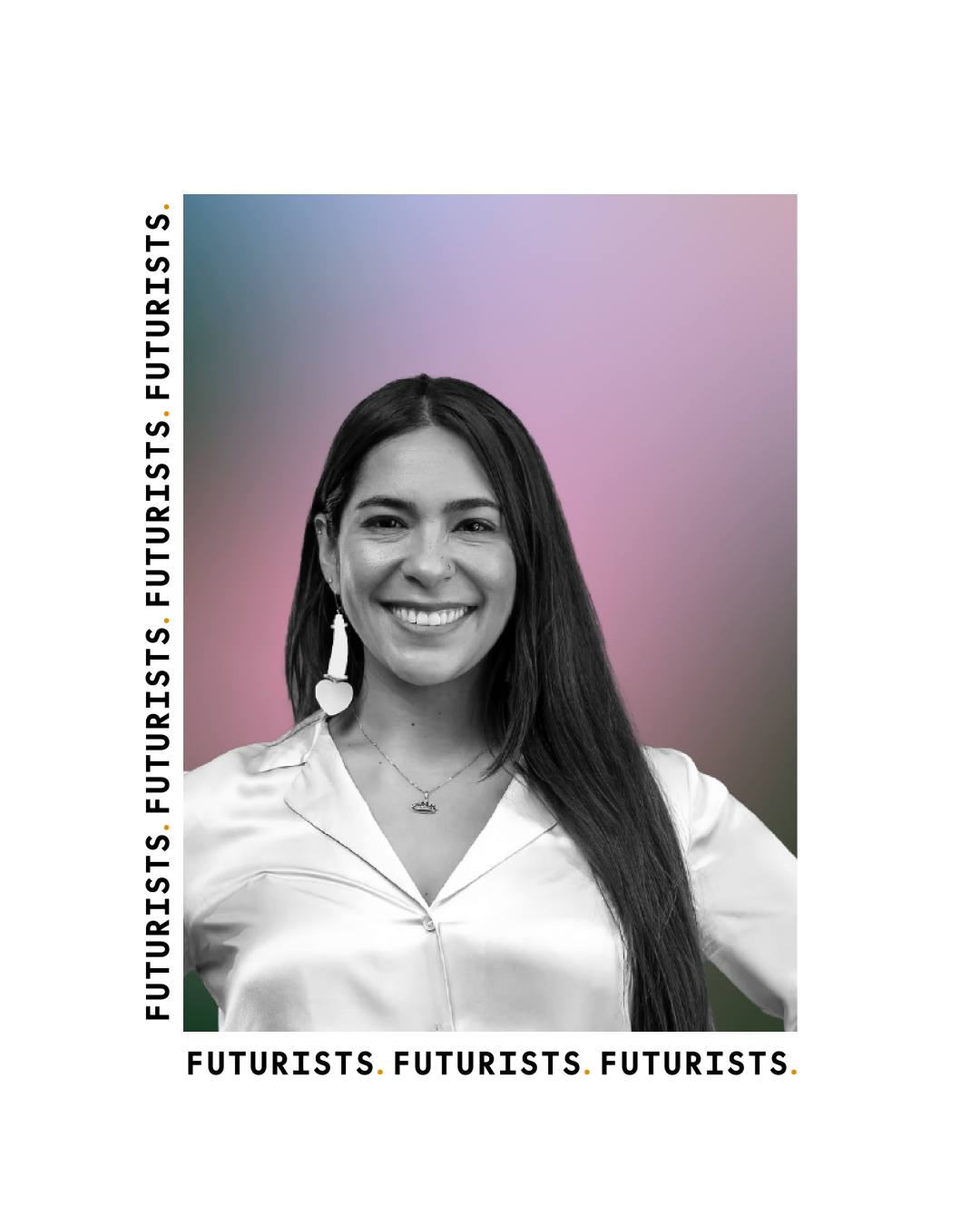
What if we loved the land? (with Brea Baker)
Authors: Daydriane Chapman, Digital Strategy Manager
Listen on Spotify / Listen on Apple Podcasts
Daydriane Chapman: What the Land Remembers
I’m standing outside, my bare feet touching the ground.
I wonder what’s underneath. If I broke the crust of the earth with one of my toes,
would I find a seed still waiting for rain?
The land has remembered year after year,
generation through generation,
layer over layer,
holding what we tried to forget.
Everything buried is still becoming something new.
Hope is already here beneath our feet,
waiting to rise.
-
What would it mean to live on land that remembers you? And what would it mean if that land was finally given back to the people it was taken from?
This is What If, where we imagine the world as it could be and meet the people building it now. I’m Daydriane, and I’m glad you’re here.
Today we’re asking: what if we loved the land?
Before we begin, some definitions for the topics we discuss in this episode. When we talk about land return, or land back, we’re talking about giving land back to the Indigenous and Black communities it was taken from, restoring both the land and the relationship. Reparations, in this context, means repair, the work of restoring what was stolen and rebuilding community around that restoration. Collective ownership is about shared power and responsibility, making sure the land can care for everyone who belongs to it.
What might it take, and what might it feel like, to make this what if real?
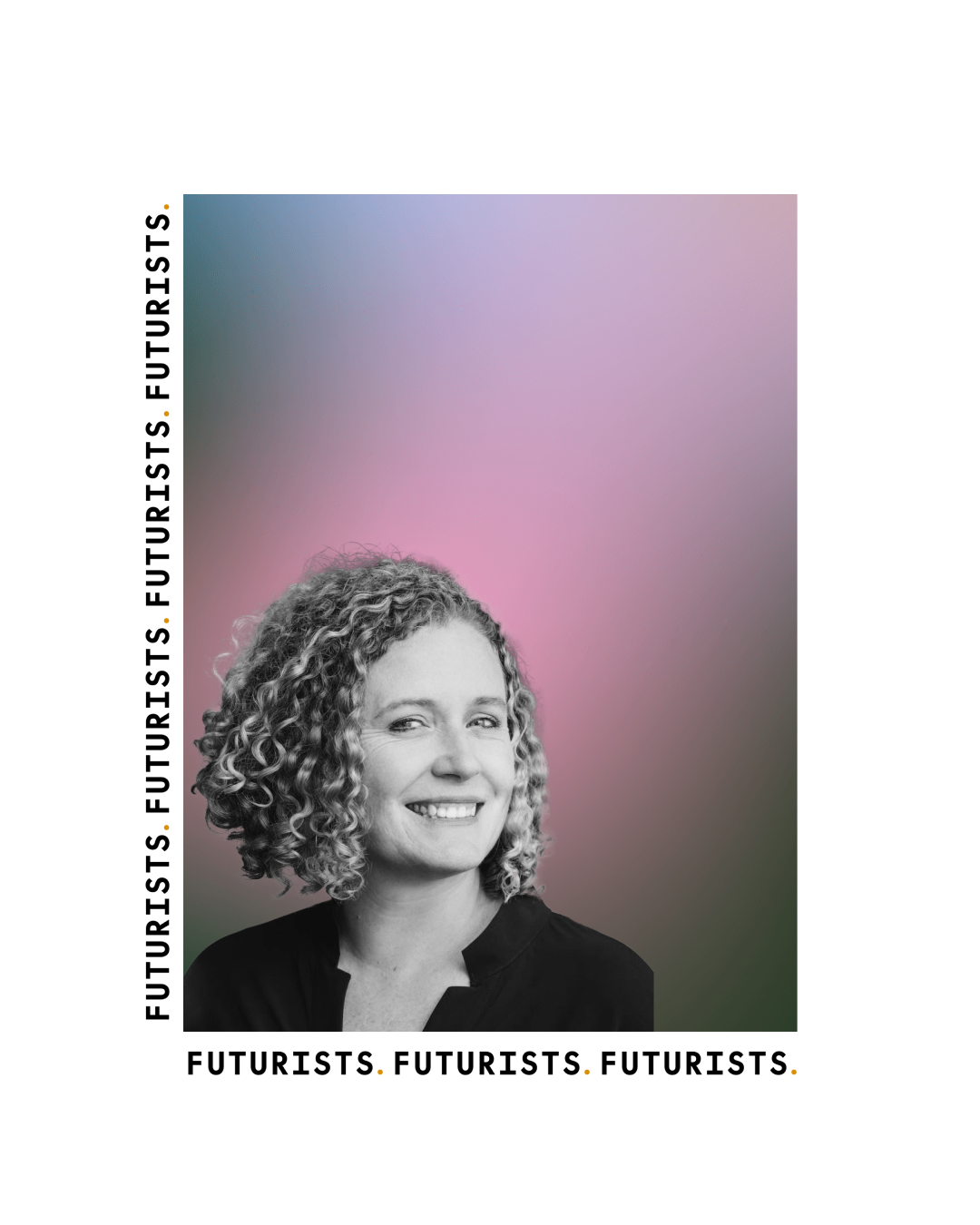
Today we are joined by Brea Baker, freedom fighter and writer. She is the author of Rooted, where she weaves her family’s story of Black land ownership into the bigger picture of justice and belonging. Brea, that’s my formal bio that I wrote for you, but how do you usually talk about what you do?
Brea Baker: First of all, thank you for the formal bio, and for the love toward Rooted. I describe myself as a freedom fighter and a writer, in that order. I came to writing through activism, not the other way around. I see writing as a vehicle to continue my advocacy, connecting people to calls to action and ways to not just dream of a better world, but actually work toward it, and to feel like it’s not only their responsibility, but that they deserve to be able to shape their future, as opposed to inheriting something that’s just not working for them.
Daydriane Chapman: That’s beautiful, and it leads right into my first question. What feels most urgent right now? I’m sure a lot of things feel urgent, but what are you most focused on in this moment?
Brea Baker: Generally, political imagination. I think people are so dejected. In a best-case scenario, people believe electoral politics is their only way to vote for and plan for the world they want to see. But in between elections, people feel thrown to the wolves, instead of feeling like there’s so much more they can and should do beyond depending on some elected official they did or didn’t vote for, who did or didn’t keep their promises.
I feel like we’re in a place where a lot of people feel like all they can do is take care of their own little home, a lot of individualism, as opposed to feeling like, how can we come together and build our power collectively and demand something different? I see these beautiful, massive protests in other countries and think, why don’t we do that more? Why don’t people believe they can do that, or that they deserve to, or that it would lead to something? I think a lot of people feel like it would be pointless, so they focus on what’s happening inside their own homes, forgetting that you don’t live in a vacuum, that everything happening outside affects what you can or can’t do inside your home.
I feel like we just lack a lot of imagination right now. Rightfully so, I don’t blame us necessarily, I think it’s incentivized. But every issue I care about, Palestine, gun rights, what I believe should be a lack of ICE and immigration enforcement, the state of Black women’s employment and economic distress, all of these issue areas are really being shaped by a lack of political imagination. It becomes: well, the best I can do is get on social media and talk about it, build awareness. But awareness-building is only supposed to be the first step, and I think we miss that important jump to actually doing something about what we’re witnessing and experiencing.
Daydriane Chapman: A lot of it is about shifting narratives, how we think about ourselves and what we deserve, our worthiness as people. You talk about this a lot in Rooted, in reference to imagining what we could have, my family could own land, I could grow my own food, have everything I need right here and not depend on anyone else to help me. You connected your own family history to the bigger story of land and belonging. Looking through that lens, how does it shape the way you think about land return for Black communities?
Brea Baker: I like this question. I think, number one, owning land and being a land steward is both a very individual and a collectivist process. I talk with comrades and fellow progressives who ask, well, should ownership even be the goal? And I say: in the world we live in, whoever has the deed gets to say what happens to the land and to the people who live on it. So from a practical sense, we need deeds. That doesn’t mean we need to own land the way other people have owned land.
Especially now, living in Georgia while my family’s land is in North Carolina, some people’s approach to land is, “I’m going to go off the grid, and it’ll insulate me from what’s happening in the outside world.” I don’t believe that. But I do think owning and stewarding land can be a vehicle toward greater collectivism. I’m more in control of what I eat, and I can extend that to my community. When my wife and I had chickens, everyone in the neighborhood knew that if they wanted fresh eggs, they could come to us, we loved being the chicken ladies on the block. It was beautiful because we were building trust and relationships in a really casual way. But it also meant that if stuff hit the fan, as it has, and groceries got out of control, and someone said, “I can’t afford eggs anymore but I need them for my family,” they knew they could come to us. From a survivalist standpoint, we became a lifeline for people in our neighborhood who know they can come to us for food if they can’t go to their normal places to get it.
That’s where I see it as connected. My goal isn’t to get out of the way, put up walls, and be disillusioned into believing I wouldn’t be affected by the sociopolitical context beyond my farm, because zoning, what I can and can’t do, what someone can come in and say we’re taking because of this, property taxes, all of that is affected by politics. I don’t believe there’s anything we can really do to extract ourselves from the politics happening around us. But there are ways we can model a world that doesn’t quite exist yet on a large scale, and prove it’s possible, like bartering, or being a source of freshness without trying to extract from every inch of the land. We’re growing here, and that’s beautiful, but it’s also important to leave some of it for the animals, there are natural habitats here, deer that need that land, beavers that need that lake.
There’s an element of culture growing stronger here that I think can be important, but it also makes me nervous, because it can lean into individualism, this idea of “me and my family have our bunker, me and my family have our stash, so I don’t care what happens to anyone else’s family.” That can be a dangerous mindset to lean too far into, even for those of us who think we’re doing it from a place of fighting the powers that be.
Daydriane Chapman: That makes me think about power, and how powerless people might feel right now. I like that reframing, you don’t have to go off the grid, you don’t have to abandon everyone and everything. There are different ways to own, different ways to establish yourself that don’t require you to block yourself off. I’m wondering how you think about power now. What does power mean to you in this moment?
Brea Baker: I feel like I’m going to be thinking about this question in the shower later. I don’t know if it’s changed from what I’ve always thought it to be, but I do think power is malleable, you could feel and be powerless in one context and have lots of power in another. I try not to think of myself as powerless, even though I’m a Black queer woman in the South, in spaces where you’d think none of those identities carry a lot of power.
But I also think I’m part of a generation that, I often talk in Rooted about being a grandchild of the Great Migration, because my grandparents traveled north during it, and now I’m in a place where Black people are traveling and moving back south, reclaiming traditions and spaces and ideas from a place of power, feeling like we have something even our grandparents didn’t have two generations ago, like the information age and technology.
So I think of power as maybe just the ability to change the world around you and make it something that better fits your vision. Some people do that in more evil ways, trying to hoard power, money, and access. And some people are doing it in a way of, let’s make everything more equitable and accessible. Those dynamics go head to head, and it’s about whose vision of the world wins, is it going to be a world made by and for billionaires, or a world made by and for the rest of us? I think we’ll be fighting that battle for many generations to come.
It reminds me of that Arundhati Roy quote, that another world is not only possible, she’s on her way, and on a quiet day I can hear her breathing. It’s not some theoretical thing I’m never going to see, she’s on her way, and we’re seeing glimpses of her. Our kids will see even more glimpses of her, and our grandkids will see even more glimpses of that world. Our job is just to get closer and closer, and keep inviting that world in. It’s like watching a tug of war, some people just pull and pull, and some people are slow and steady wins the race. I think that’s what I hope we’re doing.
Daydriane Chapman: When you zoom out to political strategy, there’s a big gap between those glimpses of the new world we’re seeing and actual tangible policy change. What do you think really moves resources or land into the hands of community, and what do you think could do it now?
Brea Baker: I think the glimpses of the world can be policy change, and some of it is changing cultural norms, because we’ve learned you can have policy change in one political administration and then the next one undoes everything. Realizing those two things have to go hand in hand matters. I have my critiques of the Biden administration, for sure, and of the Obama administration, both terms. There were some really great things they did that got rolled back so fast, we need more staying power. Sometimes the answer is policy change, and sometimes that’s one of the easiest things to roll back once you get that white-lash from conservatives taking power.
But when it comes to redistributing resources in a very explicit way, that can happen through the private and public sector both. I talk a lot about reparations, in Rooted and in my general life, I absolutely want to see it in my lifetime. People say it’ll never happen, and my counter to that is: it’s actually already happening right now. Nonprofits are buying up land and deeding it over to Black and Indigenous people. Land banks and climate justice groups are giving land back. Private citizens are engaging in these relationships. There are nonprofits like Resource Generation that exist literally to advise wealthy people, or people about to inherit a lot of wealth and land, on how to give it away in radical ways. It’s happening.
Then there’s the narrative work happening too. Guaranteed income pilots have been happening for years and years, and not just in California, a lot of attention goes to the California projects, and they’re incredible models, but then that gets used against the movement to say the rest of the country isn’t doing this. And it’s like, okay, then explain Asheville’s reparations commission, explain that Atlanta is doing reparations projects for college and high school students right now, giving guaranteed income to low-income students and single mothers. There are cities across this country, in the South, the Midwest, the North, the West, engaging in this reimagining of how to make the economy work better for us. Those pilots really matter.
It reminds me of something Octavia Butler said. She was asked, well, what’s the answer to all of these problems? And she said there is no single answer, which can make people feel hopeless. But then she continued: there are millions of answers, and you can be one of them. I love that concept, because I think so many of us, and this feeds the lack of political imagination, are waiting for some superhero leader to come in with ten policies and change our lives forever. It’s probably not going to look like that. Our electoral system isn’t set up for that kind of candidate to make it as far as they need to. But what could happen is that on a local level, you get a really great mayor, like New York City is about to get with Mamdani. You get great school board members who overhaul a curriculum. You get great nonprofit leaders and funders who collaborate to build out alternatives to policing, making it easier for people to get the help and safety they need without calling someone with a taser and a gun.
Over time, it builds up to feeling like, hey, I feel safer, my needs are more met, and I’m not depending on surveillance and bars and weapons to do it. That’s what excites me, the idea that I’m not going to have all the answers, and no one person is, but I could be part of two or three of those answers, and that could be enough. If it’s exciting enough, hopefully it encourages someone else to say, wait, you did that where? Send me the language you used to get that law passed. Send me the funder information. What community members built out that mutual aid network so we could build something similar?
We saw that during COVID in a really beautiful way, people coming together and saying, no, the federal government isn’t doing much beyond a one-time $1,200 check, that’s not going to be enough for most people. But I saw Seattle do this, I saw New York do this, and now you’ve got community fridge networks all over the country. People giving out PPE, all sorts of beautiful things. I think that’s what’s going to be a real redistribution of resources, on a hyperlocal level, people deciding what they can do in their city, their neighborhood, their borough, and watching it radiate out.
Daydriane Chapman: That reminds me, the work you do is really heavy, being in it and living it every day. How do you keep your own hope and imagination alive, beyond seeing those things people are doing and seeing the future coming?
Brea Baker: Definitely the one I already mentioned, being in real community. I’m straddling this line where I’m a young millennial, so sometimes I get lumped into Gen Z spaces, and other times I feel squarely millennial, but I’m in a lot of intergenerational spaces. That matters, because if you only exist on social media, or only exist in your little corner of the world, and then things fall apart, it’s easy to feel like there’s nothing good happening, even when things are really rough down here in Atlanta, even in the height of our Cop City organizing, or when Stacey Abrams had just lost again. Then I have friends in the Bay Area doing something, and I think, okay, wait a second, it’s so important to be lifted up in those ways.
I also think it’s important to remember that organizers can become our own echo chamber. I like wrestling with ideas alongside people who don’t consider themselves political, my cousins, my siblings, my sorority sisters, my friends, who very much want a different world too, and don’t always use the jargon to describe it. That reminds you that people are interested in these ideas even if they don’t call it guaranteed income, or free universal healthcare. They’ll come back from a trip to Europe and say, I now want something I didn’t know I could have. They’ll see something on TikTok and think, this is happening somewhere else. They’ll just lament, well, what if it could be like this, what if we actually went there?
The last two things I’d say: being a young mom has radicalized me even more, which I didn’t know was possible since I was already very radical going into motherhood. Having kids affirms that I’m invested in leaving behind a very different world for my sons. I’m raising two little Black boys, and I want something so vastly different from what I got. I know that’s how my parents and their parents thought about us, and even with all the mess we have to deal with, things have gotten better. I have opportunities and access my grandparents could only dream about. I imagine being an old lady on my covered porch in my rocking chair, watching my grandchildren talk about things that feel very normal to them, that we fought so hard to make happen. I love that they get to take that for granted. That helps.
And then the last thing is books. I was a reader before I was a writer, and I remember being very angry, especially after the acquittal of George Zimmerman, and being connected to books like The Autobiography of Assata Shakur, the writings of the Combahee River Collective, Malcolm X’s autobiography, everything Angela Davis has ever written, feeling seen by the fact that they were diagnosing very similar problems. Angry that we were still talking about the same problems, but also understanding I’m not the only one angry about it. It encourages you to link arms with other people, with ideas that were thought of before I even existed. Now I’m getting way more into fiction, especially speculative and science fiction, because when it’s written by Black and Brown people, that’s where you really imagine these newer worlds. I reread a lot of Octavia Butler, and it’s like, my god, this is too close to home, but then you get to the end and think, okay, that’s what I need to be doing with my land, get my Earthseed on. It’s encouraging to lose yourself in a really good book and then come back into the real world wanting to make things look very different.
Daydriane Chapman: I like how you spoke about people who don’t consider themselves political, or don’t think about things the same way we might. For people listening who don’t see themselves that way, are there tangible ways they can support their own political imagination, or something related to land justice or reparations work?
Brea Baker: I’d say, definitely get connected to local groups, because it can feel daunting to think, well, now I have to volunteer for some big national organization and take on that big stage. There’s stuff happening in your community right now, and what I love about those spaces is that they’re intimate enough for deeper conversations, versus a big convention or mass meeting for a national organization, where there are just too many people for everyone to have space to speak.
That’s where my own transformation happened, from being an everyday person to someone invested in organizing work, being in spaces where I could really talk through: if we really got reparations tomorrow, what would it look like? What would I need to get the work done? Who’s Black enough to get reparations? Let’s cut the diaspora wars and have real conversations about race, ethnicity, and nationality, and how that shapes things. What are the best policies? Do I want everyone to get a check? There was a time earlier in my journey where I truly believed reparations would just be every Black person getting a check. When I really thought about it, I realized, you know how big that check would have to be for it to actually make a difference? I don’t know if I believe in checks anymore. I believe in assets, something that’s going to grow. I want land transfers, property transfers, bonds, not one-off checks, but guaranteed income, regular monthly checks, free education, tax exemptions. I shouldn’t have to pay property taxes as a Black person who’s dealt with land theft. Banks and insurance companies should be on the hook too, not just the federal government. Those are the kinds of things you can’t really dig into sitting alone in your room just wishing this would happen.
So I’d encourage people to find a local organizing group that does book clubs, film screenings, other meetings and sessions where you can voice your concerns and link arms with someone who’s been sitting with that question for two months and has an answer. It doesn’t have to be the answer, but it makes you think about the question differently, and that matters so much.
If you’re specifically wanting to do this around reparations or land justice, and you live in New York, Illinois, or California, it’s really easy to get connected, there are statewide reparations task forces. In New York, they do hearings and meetings all over the state; I’m from Long Island, and they do several in-person meetings there. If you live in a city like Asheville, or you can Google your nearest city plus the word “reparations” and see if there’s a local task force, even if not a statewide one. And if there’s not one, there are organizations like BLIS, Black Liberation and Indigenous Sovereignty, doing great work around narrative change, and you can find creatives, artists, academics, and nonprofits talking about reparations to connect with too.
Even if it’s just, “Me and my group chat want to talk more about this, let’s create some informal way to do this, let’s read this book together and talk about it.” My line sisters and I read together a lot. If you’re in a sorority, say, let’s do more than talk about the next party or barbecue, a new book on reparations just dropped, let’s read a chapter or two and talk about it, see what we could do differently, how it might change the way we relate to the people around us.
Daydriane Chapman: I have one more question before my final one. I’m thinking about how “woke” is basically a slur now, when there was a time, 2020, when everybody cared so loudly about Black lives and the movement, and how it’s gone almost the reverse way. In your work with land and reparations, in this moment where we’re almost triaging different issues, we’re not talking about land right now, we’re not talking about reparations right now, we’re talking about immigration, the price of eggs, how do you keep that North Star?
Brea Baker: On one hand, we talk often in progressive spaces about how interconnected all these issues are. There are moments where a group is under immediate attack and we have to have that conversation in a real way, top of mind. But I think it’s important to make the connections for people, to understand it’s not that I’m dropping one issue I care about to pick up another, it’s my care for this issue that allows me to care about that other one.
For example, around Palestine, my oldest son is two years old. He doesn’t really understand yet, but we do political education every day, even at this age, because I feel like if I start now, by the time he’s older he’ll actually be asking questions, and it helps with his development. When I talk to him about Palestine, I talk about it through the context of our family. I’ll say: your grandpa, your great-grandfather, fought so hard for our land in North Carolina, remember, that’s the land where we go for the holidays, where you got to play outside and do all that fun stuff by the lake, and that’s possible because of his love for that land. And right now, there are people in a place called Palestine who love their land just as much. Maybe their land looks different, maybe they don’t have pine trees, but they have olive groves; maybe they don’t have lakes and ponds, but they have the sea. And right now their land is being taken from them. So just as we fight for our land in North Carolina, we’d hate it if somebody took our land, we have to fight for people who are seeing their land taken away, who are dying because somebody believes they don’t deserve to live on land their grandparents fought so hard for.
I think part of the beginning of the anti-woke era was people committing to the idea that all these issues are way more complicated than progressives want you to believe, making it feel so complicated that the average person silences themselves, thinking, I need a PhD to talk about this. It’s not. It’s as simple as: these people were born here, their parents were born here, their grandparents were born here, and now they’re being removed to make way for settlements. Talking about ICE, it’s the same, my mom was born in Chicago, my dad was born in New York, but now we live in Atlanta, and we’re making it our home. It’s important not to erase local culture, to be regenerative, but we also have the right to move around. What happens if you try to move to make a better life and someone puts you in jail for it? That would be so bad.
The things that are actually complex are how we word the solutions, how we draft legislation, but understanding what’s right and wrong is nowhere near as complex as they try to make it. In this woke-versus-anti-woke era, they’re trying to confuse people: “I love Black people, I just don’t believe in critical race theory for kindergartners.” That’s not what’s happening. Critical race theory is a legal framework taught to grown adults in law school, that’s not what’s happening in your child’s kindergarten class. What’s happening in kindergarten is they’re talking about empathy, Black History Month, Juneteenth. That’s not a bad thing. These are things that happened in the place where your kids live, and they should learn about it, and know how to relate to my child with respect and love, not tolerance, not disdain. It can be that easy.
My child goes to a Montessori school with mostly South Asian and East Asian classmates, and we tell him it’s okay if you go to school with people who don’t speak your language, there are ways to connect. They don’t look like you, but you can connect in different ways. He’s not fully understanding everything I’m saying yet, but if you start this young, hopefully it becomes second nature, why would I ever think otherwise? I think what they’re against is making it normal and easy to know what’s right and wrong. They want you confused, thinking, well, if I work hard I should be a billionaire. No, you didn’t earn that on your own. I saw something today that said if your workers are on food stamps, your shareholders shouldn’t get a bonus, and I thought, if your workers are on food stamps, maybe you shouldn’t have shareholders at all. We’ve normalized things that shouldn’t be normal. Why are we even beholden to certain economic ideas? The more you’re forced to interrogate and ask questions, instead of just accepting things as they are, the more you realize, I don’t want to reject the word “woke” just because they’ve redefined it. I’m reading, I’m aware, I’m woke. I never dropped it. It’s not a fad for me.
And it shouldn’t just be our kids learning this, I’m aware that I’m probably talking to my son about things his white peers’ parents aren’t talking to them about, so my kid is going to school much more aware of the world than his white peers have to be. That should be their responsibility even more than it is the responsibility of the children on the receiving end of injustice.
Daydriane Chapman: That’s amazing that you teach your son that. It shows exactly how easy it is to talk about these things.
Brea Baker: It can be so easy. There are so many good kids’ books now, he loves A is for Activist. It’s so funny, I’ve read it so many times I’ve memorized it, “C is for co-op, creative counters to corporate vultures”, and I’m like, yes, you better learn about co-ops and creative counters to corporate vultures. There are also great companions to adult books, the 1619 Project has a children’s version.
Daydriane Chapman: Wow, that’s amazing.
Brea Baker: They’re really well done, and made much more accessible, they don’t go as in-depth as the adult versions, but I could be reading something and find the youth companion for it, read that to my kid, and then we have deeper conversations. Like, okay, we just read the 1619 Project youth edition, now I have a clear way to talk to you about the legacy of slavery. There are so many books about Juneteenth now, about land justice, a ton of books about Black farming and land ownership. We talk to him about all of it, but he also lives it, he goes outside and sees the chicken coop in our backyard, goes to his grandparents’ house and sees their ethical farming and hunting, goes to our land in North Carolina and loves it so much. Then it becomes about not just protecting our right to have this, but understanding everyone should have something like this. There’s plenty to go around, us having this doesn’t have to come at the expense of no one else being able to. There’s enough land for all of us if Bill Gates doesn’t have 350,000 acres of it. We could all have five.
Daydriane Chapman: I love that. We always end with a what if, and we’ll end here. What if we loved the land? What would that new world look like, feel like, and smell like?
Brea Baker: Ooh, I love this. The air would be so much fresher. We’d see so many more stars, you wouldn’t have to travel to some exotic island or go to Iceland to see them, you could see stars right where you live. The food would be so fresh, you wouldn’t have to go on Instagram and see a recall of oysters or lettuce or broccoli. You’d trust where all your food came from, you’d know where it came from. You might know your farmer’s name, I get my eggs from Ria, I get my groceries from Jonathan, I get my meat from this butcher who raises the animals himself. The public parks would be beautifully tended, and you’d see native folks foraging and fishing.
Instead of regular lawns and random green plots in the middle of a highway, you might see vegetables and fruit growing there. You might walk down the street and pick a mango or an apple, depending on where you live, and know what’s in season, you wouldn’t expect fruit all year round, but you’d know, my gosh, the plums are so good right now, I can’t wait to walk down the street and grab some plums that are just available and accessible.
I think if and when land is returned, we’d see cleaner water, cleaner beaches and waterfronts. We’d experience way less wildfires. Hurricanes would still hit, natural disasters exist, that’s the world we live in, but our land would be more resilient to it, and people wouldn’t lose their homes and livelihoods because of it. Our kids would frolic more, you’d see little kids of all backgrounds running around open fields, laughing, playing, no shoes on, grass between their toes, coming back with fruit they know a lot about, because it would be normal for us to know about the natural world around us. We’d see more animals in spaces where they’re nourished, fewer extinct species, hear more birds in the air.
I feel like it would also encourage us to live a slower life, because with all of that going on, who wants to work a 60-hour work week? If and when land is returned, we’d also figure out ways to work less and have a better quality of life.
Daydriane Chapman: Perfect answer. I always say there’s not one answer after we ask these what ifs, but I feel like that was the answer. Thank you so much.
Brea Baker: Now I want it right now.
Daydriane Chapman: I really felt that.
Brea Baker: That’s the goal, for the vision to be so exciting that you think, wait a second, that’s possible, what do I have to do to make that happen? So if you’re listening and that sounded good to you, look into land return projects near you, look at what climate justice groups are and aren’t doing, and encourage them to consider getting involved in land redistribution projects. There are nonprofits doing this in other parts of the country, and we need that everywhere.
Daydriane Chapman: Thank you for being here with us. We’ll be back here next time with a new question and new answers. Thank you, Brea.
Brea Baker: Thank you.
Daydriane Chapman: This is What If, a podcast by Common Futurists. What If is hosted and produced by me, Daydriane Chapman. Cover art is by Kat Jaynes. Music is by Sam Barsh and Lunaray. For more What If content, follow us on Instagram at Common Futurists.
The future is in our imagination and in our inbox. Send your thoughts and dreams to whatif@commonfuture.co.