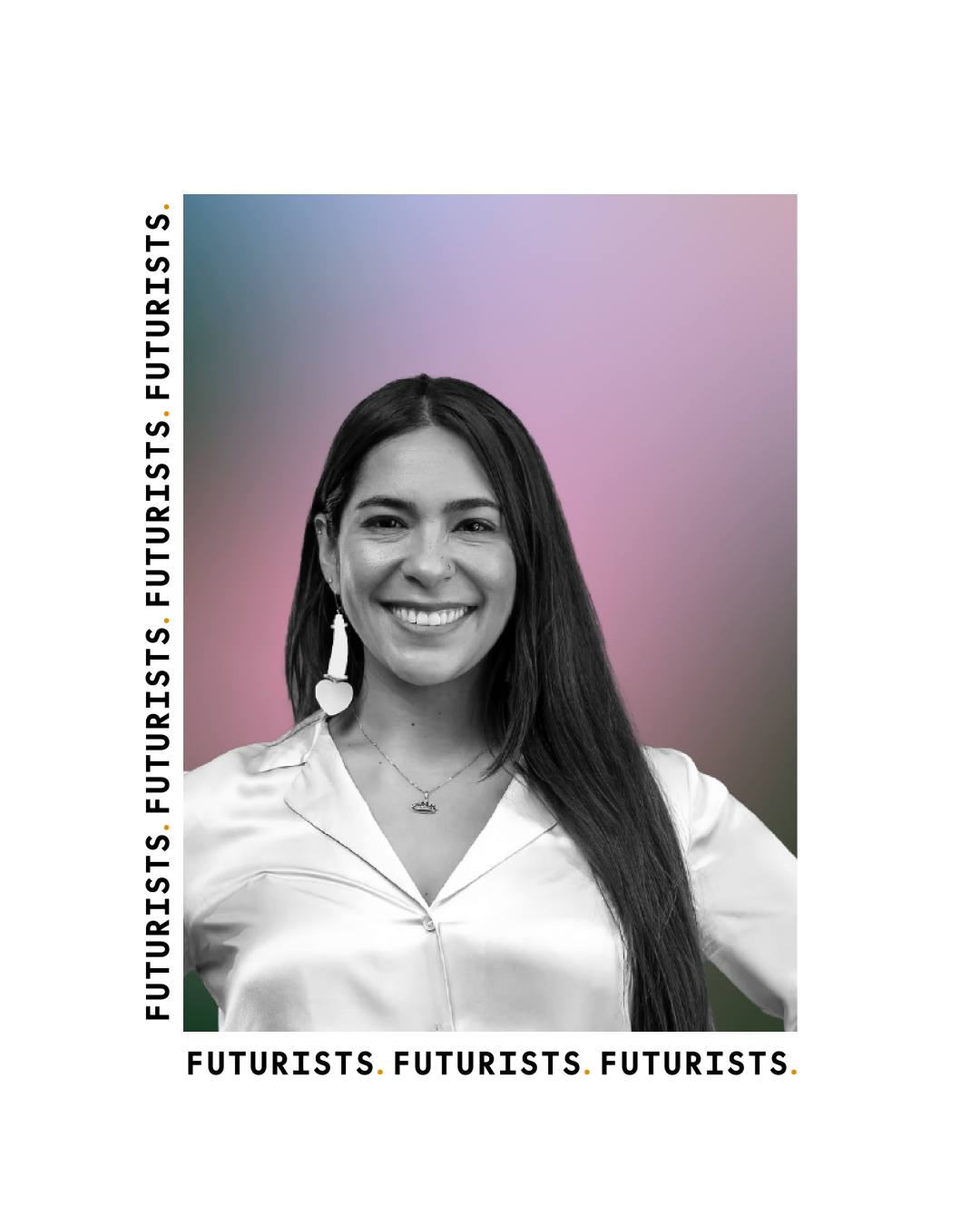
What if there was no rent? Featuring Natalie Foster, President, Economic Security Project
Authors: Daydriane Chapman, Digital Strategy Manager
Listen on Spotify / Listen on Apple Podcasts
What if there was no rent? (with Natalie Foster)
Daydriane Chapman: When you close your eyes and picture home, what do you see? Maybe it’s safety, or it’s rest. Maybe it’s the smell of dinner cooking and laughter spilling out of the kitchen. Now imagine a world where everyone had that, where home wasn’t fragile, and it wasn’t something you could lose.
This is What If, where we imagine the world as it could be and meet the people building it now. I’m Daydriane, and I’m glad you’re here.
Today we’re asking: what if rent didn’t exist? What if we lived in a world where no one’s home could be taken away because they couldn’t afford it?
For generations, we’ve been told that poverty is personal failure, that if you just work harder, plan better, save more, you’ll make it. But that story has never been true.
Before we start, there’s one idea that Natalie Foster talks about that might be new: guarantees. When she says guarantees, she’s talking about the public systems that make sure everyone has basic security, like housing, healthcare, and childcare.
So what does it take to make this what if real?
Today we are joined by Natalie Foster, a voice and leader in shaping a future where the economy actually works for everyday people. She’s spent years building organizations and movements that push our country toward more fairness and security. She wrote the book The Guarantee, which invites us to imagine a future and an economy built on security and dignity for everyone. Natalie, there’s so much I could say about you and your work, but how would you introduce yourself and what you’re most focused on right now?
Natalie Foster: Thanks for having me. I’m Natalie Foster. I’m president of Economic Security Project, and I’m focused on building economic power for everyone.
Daydriane Chapman: Beautiful. In your book, Guarantee, you write about an economy that provides housing as a right. If that were true today, what would home feel like for an everyday family? What would it open up for them?
Natalie Foster: The guarantee of housing is one of the guarantees I got to explore. I spent a lot of time with Tara Raghuveer, an organizer based in the Midwest who has launched a national tenants union to advocate for a housing guarantee. Spending time with organizers like her and her members, I started to imagine what it would look like to live in a world where housing was a right, where everyone had access to housing they could afford, where there was a floor through which no one could fall.
It would mean families weren’t stressed about making rent every month, or worrying about where they’d be from month to month. It would mean families could go to the doctor for preventative visits more often, maybe the dentist too. It would mean families could afford the soccer kit at the start of the season without stress, not worrying about a kid outgrowing their gear. One parent named that as something really important to her, and it struck me as the kind of thing everyone deserves to be able to provide for their family. It only works if there’s economic security and a floor for families.
Daydriane Chapman: We actually saw a glimpse of that during the pandemic, eviction pauses and support for people that once seemed impossible. What did those moments reveal to you about how quickly the rules can change when we decide to protect people?
Natalie Foster: I love your question, how quickly the rules can change. For so long we’ve said housing is left entirely up to the private market, that it’s very local, that there’s nothing we can do. Then a pandemic hit, and there was an economic crisis unfolding alongside a health crisis. As a nation, we decided it was not safe for people to live on the streets, and we did something about it. We passed laws that allowed us to buy hotels and move unhoused people in, giving people who were on the streets a room with a key of their own, a door they could shut and lock for the first time. We passed an eviction moratorium. We saw governments getting into the business of building housing in their communities, like Montgomery County, Maryland, which decided not to leave it entirely up to chance and the private market.
Yes, the private market plays a role, but the county also got involved in ensuring there was a floor of housing. It was extraordinary to see happen almost overnight. Unfortunately, a lot of that has since slipped away. But the good news is we have a blueprint for what it could look like if we decided to take on industrial policy for housing and got serious about it in the United States.
Daydriane Chapman: Do you think that memory, that moment in time, is still shaping the conversation around what’s possible, or are we already losing that blueprint?
Natalie Foster: I think we all hold so much collective trauma from the pandemic period that talking about it brings up all kinds of associations for people. We remember something extraordinary and terrible happened then, but in the midst of that, we tend to forget how profound some of the shifts were.
We had the lowest number of uninsured Americans in history during a health crisis, because we got closer to a healthcare guarantee than ever before, we decided it was important and expanded the existing systems in a profound way. We cut child poverty in half. We had the lowest poverty rates since we began recording poverty, in the midst of a pandemic, because we sent people checks. We decided it was important that folks had the breathing room to take care of themselves and their families during a crisis.
It’s important to keep naming that, especially now, as we sit at the start of an economy in the age of AI, where we know there will be profound shifts in the workforce and more crises ahead. We have a blueprint for how we can respond when we have the political will.
Daydriane Chapman: You talk about guarantees as a way to shift what people believe they deserve. How do you explain that idea to someone who hasn’t thought about guarantees before?
Natalie Foster: One important thing is realizing that guarantees already exist in today’s world, largely for business and the wealthy. The guarantee of the patent system, the guarantee of the courts, the guarantee that we’ll have a stable currency, the guarantee that shareholders shouldn’t be held liable for a company’s misdoings. They’re guaranteed all of that. So I’m just arguing we should guarantee a baseline of economic security for everyone in this country, the people who actually make up the American economy, who work day in and day out to build this country. We should have a guarantee of a good life too.
Daydriane Chapman: Sometimes it’s hard to unlearn that story of scarcity, that that’s just how things are. There’s so much money around these businesses and companies, and they have more legal protection than us, so they seem more important than us. How can we break through that mindset?
Natalie Foster: That’s exactly right, because the dominant story we’re told is to pull yourself up by your bootstraps, and if you don’t, it’s your fault. You made a bad decision. You bought avocado toast when you should have squirreled away those extra dollars. You bought a latte. But instead, it’s a structural system designed to move money up to the wealthy, which has resulted in flatlining wages for generations despite increased worker productivity. It’s not a result of bad decisions.
Unlearning that is incredibly hard. And with that story comes a lot of shame, shame people feel when they can’t make it today. By making it, I mean when they can’t provide for their family the way they want to, when they can’t live life on their own terms, when they feel stuck in a job that doesn’t pay enough to make ends meet but can’t quit or spend time finding another job because they’re working eight, nine hours a day, seven days a week.
That kind of shame is created in people, and I think it really starts to erode trust, trust in institutions, trust in community. You see how that spirals out and becomes part of the reason we’re seeing an erosion of trust in democracy in general. With a new story, that we as a society can create a floor through which no one can fall, you can see how there would be more trust, more possibility, more time for people to engage with the PTA and the city council. An upward spiral, not only for families but for our democracy as well.
Daydriane Chapman: What are some other stories about deservedness or scarcity that you’re most often pushing back against in your work?
Natalie Foster: The scarcity narratives, the idea that we don’t have enough, are often very racialized. The idea that when Black or Brown or immigrant communities gain, white communities lose. Heather McGhee wrote a seminal book on this, The Sum of Us, looking at zero-sum politics. Because in truth, when there have been universal guarantees, public schools, social security, libraries, clean water, we’ve grown prosperity for everyone: white communities, Black communities, Brown communities, and immigrant communities. That is the promise of this country that has yet to be realized, but it is the promise. That’s one important part of the scarcity narrative to name.
Daydriane Chapman: How do you personally keep your imagination open and your hope alive in this work, especially right now?
Natalie Foster: A quote you and I have both loved over the years is Mariame Kaba’s, that hope is a discipline, that it requires a lot of work, especially in this day and age. The quote is something like “get offline and go touch grass.” I think that’s right, but I’d say it differently, I’d say go touch people. Go be with people who are in motion, who are doing something, whether it’s mutual aid, protesting in the streets, or just attending a city council meeting on behalf of a larger community. Be with people who are in motion, because you’ll rediscover that sense of hope and inspiration, which is especially important in these dark times.
Daydriane Chapman: What about with people who may not have the same experience or know-how as you, everyday people? What’s one small step, one thing they can take in their own lives or communities to lean into the idea of guarantees?
Natalie Foster: That’s such a good question, if someone isn’t a professional activist, what do they do if they’re inspired by the guarantees? A couple of ideas: one, people could make art, art that explains the basics of how everyone should have a house, everyone should have healthcare, everyone should have access to family care, everyone should have higher education. At many points in this country’s history, these things have been seen as public goods, even though we’ve lost that over the last 50 years, and understanding that it wasn’t actually possible for many communities during that period anyway. Art can bring that up. Today, art can happen across TikTok, YouTube, Twitch, and other places where people are creating in all kinds of ways. I’m always inspired by that. What about you? What have you seen people do, or what do you think people could be doing?
Daydriane Chapman: I think it’s so normalized to just keep going and going until you can’t anymore. But really giving myself intentional time for rest counters that narrative, that there’s something I have to do to earn rest, or earn something, rather than just being worthy of it. Why can’t I have rest all the time? That’s one thing: giving myself intentional time to rest, to remind myself that I need that, and that it’s not a gift or a luxury.
Natalie Foster: I really love that. A world where we had the guarantees would be a world where we had more time to breathe, more rest and play. There’s an old labor slogan: bread and roses. People need the bread, but they also need the roses. Both are important. I don’t want to lose that.
Daydriane Chapman: Since we spend this time asking what if, imagining a world that’s never been, we also need to hear some answers. So let’s close with this: if there was no rent, what kind of world would we be living in? What would it sound like, feel like, look like? Natalie, what’s your answer?
Natalie Foster: It would look like children playing outside. It would look like parents gathering after work because there was spaciousness, community, time to put into community. It would look like shared meals. It would look like the freedom to play, to rest, to work, to contribute your talents where you choose to contribute them. That’s the world that’s possible.
And I think that world is possible even with rent, just affordable rent, kept stable, like we’re seeing in Montgomery County, Maryland, where the county is building housing kept off the speculative market and stable for working families. That’s a world I feel like we could build today if we put our minds to it.
Daydriane Chapman: Natalie, thank you so much for helping us imagine what true security could look like.
Natalie Foster: Thanks for having me.
Daydriane Chapman: We’ll be back here next time with a new question and new answers. Thanks for being here with us.
This is What If, a podcast by Common Futurists. What If is hosted and produced by me, Daydriane Chapman. Cover art is by Kat Jaynes. Music is by Sam Barsh and Lunaray. For more What If content, follow us on Instagram at Common Futurists.
The future, in our imagination and in our inbox. Send your thoughts and dreams to whatif@commonfuture.co.